What Is NASCAR and Motorsports Technology Training?
Auto School Guide helps prospective students compare schools offering NASCAR-focused and motorsports technology training. Programs may combine general automotive instruction with race-engine preparation, chassis and suspension setup, fabrication, electronics, data acquisition, aerodynamics, and trackside operations. Motorsports jobs are competitive, and completing a program does not guarantee employment with NASCAR, a race team, or a particular performance shop.
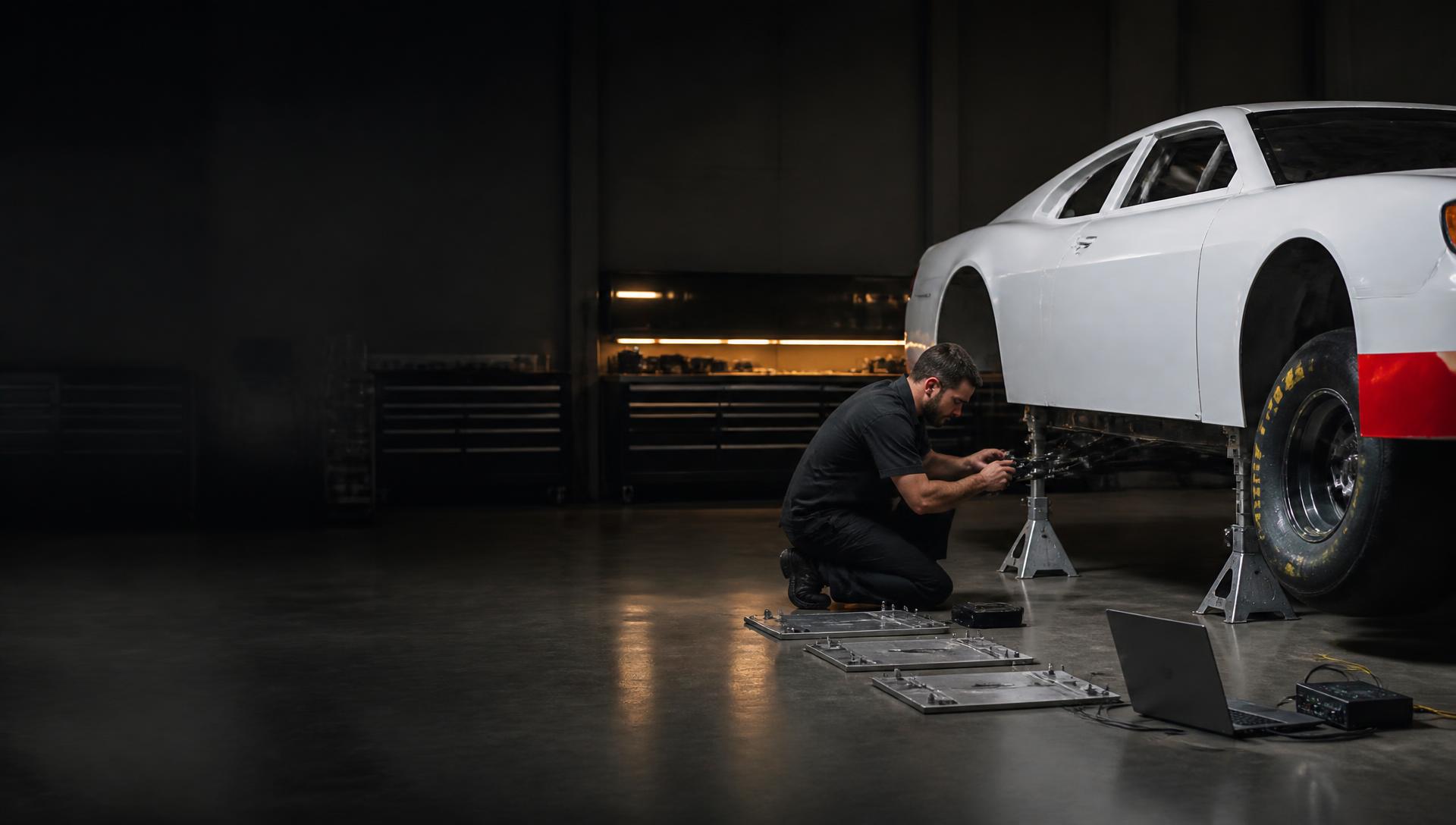
NASCAR and motorsports technology training introduces students to the mechanical, electrical, fabrication, measurement, and diagnostic skills used when building, preparing, maintaining, and evaluating performance vehicles. Programs may begin with core automotive systems and then apply those principles to racing engines, drivetrains, chassis setup, suspension geometry, brakes, electronics, aerodynamics, safety equipment, and trackside procedures.
The exact curriculum varies by school. Some programs are dedicated motorsports courses, while others are advanced or elective portions of a broader automotive technology program. Students should confirm how much of the curriculum is specifically devoted to race vehicles and how much covers general automotive service.
A motorsports education can develop transferable automotive and fabrication skills, but it is not a guaranteed path to employment with NASCAR or a professional race team. Entry into professional racing may also depend on experience, professional contacts, geographic flexibility, travel availability, and demonstrated performance in a shop or track environment.
Related training on Auto School Guide
What Do Motorsports Technology Programs Teach?
Coverage varies by school and program length. Motorsports curricula commonly address the following areas.
Performance engines
Students may study engine construction, airflow, fuel delivery, ignition, cooling, lubrication, compression, measurement, assembly, testing, and performance diagnosis.
Chassis and suspension setup
Training may include ride height, alignment, weight distribution, springs, dampers, steering geometry, suspension adjustments, and the relationship between setup and vehicle handling.
Brakes, wheels, and tires
Students may examine performance brake systems, thermal management, wheel installation, tire construction, pressure, wear patterns, and how tires affect grip and handling.
Drivetrain systems
Programs may cover clutches, transmissions, transaxles, driveshafts, differentials, gearing, axles, and methods of transferring power to the wheels.
Fabrication and welding
Some programs include metal preparation, cutting, forming, welding, bracket construction, exhaust fabrication, tube work, and component installation. Not every motorsports program includes welding instruction, so confirm the amount and type of fabrication training offered.
Electronics and data acquisition
Instruction may include sensors, wiring, electrical diagnosis, engine-management systems, data logging, telemetry, and the use of recorded information to evaluate vehicle performance.
Aerodynamics
Students may be introduced to downforce, drag, airflow, splitters, spoilers, diffusers, body configuration, cooling airflow, and the effects of aerodynamic balance.
Shop and trackside procedures
Programs may address inspection routines, documentation, fast repairs, communication, tool organization, safety procedures, setup changes, and working under time constraints.
How Are Race Vehicles Different From Street Vehicles?
Race vehicles and street vehicles share fundamental mechanical principles, but they are designed for different operating environments. Competition vehicles may prioritize adjustability, repeatability, rapid service, weight distribution, thermal management, aerodynamic performance, safety systems, and performance within a detailed rulebook.
Technicians must understand how changes to tires, alignment, springs, dampers, gearing, brakes, aerodynamics, and weight distribution can affect the vehicle as a complete system. Accurate measurement and documentation are essential because small setup changes may alter handling or performance.
Modern NASCAR Vehicle Technology
NASCAR's Next Gen Cup Series vehicle introduced technology that illustrates how modern race-car engineering has changed, including:
- A sequential five-speed shifter
- A rear transaxle
- Independent rear suspension
- Rack-and-pinion steering
- Larger brakes
- 18-inch forged-aluminum wheels
- A single center-locking lug nut
- A composite body
- An underwing and rear diffuser
- Increased vehicle connectivity
These features are examples of modern race-vehicle engineering. They do not indicate that any particular school owns or trains on an active NASCAR Cup Series Next Gen car.
Why Measurement and Data Matter in Motorsports
Motorsports technicians do more than install parts. They measure components, document setups, inspect wear, verify clearances, evaluate temperatures and pressures, and use data to understand how a vehicle responded on the track or test equipment.
Depending on the program, students may use tools such as calipers, micrometers, torque wrenches, alignment equipment, pressure gauges, diagnostic scanners, dynamometers, scales, and data-acquisition software. The ability to record repeatable measurements and communicate findings can be as important as mechanical speed.
Programs with meaningful hands-on training should teach students why a change is made, how it is measured, and how its results are evaluated.
Safety in a Motorsports Shop
Performance and race shops may involve:
- Raised vehicles
- Rotating machinery
- Compressed air
- Welding and cutting
- Fuel and flammable materials
- Hot engines and exhaust systems
- Batteries and electrical systems
- High noise levels
- Heavy components
- Moving vehicles
- Trackside working conditions
Programs should teach appropriate use of personal protective equipment, safe lifting, tool safety, fire prevention, ventilation, equipment inspection, and organized work practices.
Motorsports work is not risk-free, and completing a school program does not replace employer-specific safety instruction.
Careers Related to Motorsports Technology
Relevant training may support entry-level opportunities such as:
- Race-shop technician
- Performance automotive technician
- Engine assembly or engine-shop assistant
- Chassis or suspension technician
- Fabrication assistant
- Wiring or electronics assistant
- Data-acquisition assistant
- Dynamometer technician assistant
- Parts or equipment specialist
- Pit or trackside support crew member
- Automotive service technician
- Performance parts installer
- Vehicle setup or alignment technician
Job titles and responsibilities vary widely. Some graduates begin in general automotive, fabrication, parts, testing, or performance shops before pursuing professional racing opportunities. Race-team positions may be seasonal, contract-based, travel-intensive, or concentrated in regions with established motorsports industries.
No program can promise that a graduate will become a NASCAR technician, pit-crew member, crew chief, race engineer, professional driver, or employee of a particular team.
Is a Motorsports Technician the Same as a Race Engineer?
No. Motorsports technicians and mechanics generally focus on vehicle assembly, inspection, maintenance, repair, fabrication, setup, and trackside execution. Race engineering positions often require more advanced education in mechanical engineering, data analysis, vehicle dynamics, aerodynamics, or a related discipline.
Responsibilities differ by employer and competition level. A technical-school motorsports program may provide valuable hands-on preparation, but it should not be presented as equivalent to an engineering degree.
Is a School Certificate the Same as ASE Certification?
No. A school certificate, diploma, or degree is an educational credential awarded after completing a program. ASE certification is a separate professional credential involving ASE testing and applicable work-experience requirements.
ASE does not offer a general “NASCAR technician” certification. However, automobile and light-truck ASE test areas—such as engine repair, suspension and steering, brakes, electrical systems, and engine performance—may relate to foundational skills used in performance automotive work. Graduating from a program does not make someone ASE-certified automatically.
Career Outlook for Motorsports Technology Graduates
The Bureau of Labor Statistics does not track NASCAR or motorsports technicians as a separate occupation. The closest broadly reported occupation is Automotive Service Technicians and Mechanics. BLS reports a national median annual wage of $50,620 for that occupation in May 2025. Employment is projected to grow 5 percent from 2025 through 2035, with approximately 66,200 openings projected each year on average.
These figures describe the broader automotive service occupation and should not be interpreted as NASCAR-specific pay or hiring projections. Professional motorsports is a smaller, specialized, and competitive employment sector. Actual opportunities and compensation depend on technical ability, experience, professional relationships, location, travel availability, competition level, and employer needs.
Who Should Consider Motorsports Technology Training?
Motorsports training may appeal to students who enjoy automotive systems, precise mechanical work, problem-solving, performance testing, fabrication, measurement, and working as part of a team. It may be especially relevant for students who want automotive fundamentals with additional exposure to race-vehicle preparation and performance technology.
Students should understand that motorsports work may require:
- Attention to very small details
- Strict safety and inspection practices
- Physical work
- Irregular or long hours
- Nights and weekends
- Travel
- Fast turnaround times
- Teamwork under pressure
- Willingness to begin in a supporting role
- Continued learning as technology and rules change
How to Compare Motorsports Technology Schools
Ask each school:
- Is motorsports a complete program, a specialization, or a short elective?
- How much instruction is motorsports-specific?
- Which automotive fundamentals are included?
- What race or performance vehicles do students work on?
- Do students receive individual hands-on time?
- Are engines assembled, measured, tested, or run?
- Does training include chassis setup and suspension geometry?
- Are fabrication and welding included?
- Does the program include electronics, wiring, or data acquisition?
- Is dynamometer training available?
- Are shop safety and trackside procedures taught?
- Are instructors experienced in professional or grassroots motorsports?
- Can the school document instructor experience without relying on vague promotional claims?
- Does the program have current industry relationships?
- What do internships or employer introductions actually include?
- Are tools, safety equipment, testing, and materials included in tuition?
- What percentage of graduates work specifically in motorsports versus general automotive roles?
- Are placement statistics current, documented, and independently verifiable?
- What is the cancellation and refund policy?
Treat guaranteed race-team employment, guaranteed NASCAR placement, or unusually high salary claims cautiously. Ask the school to provide important claims, costs, placement definitions, and employment conditions in writing.
Keep exploring Auto School Guide