What Is Airframe and Powerplant Technician Training?
Auto School Guide helps prospective students compare schools offering Airframe and Powerplant technician training. FAA-certificated Aviation Maintenance Technician Schools provide approved curricula that may establish a qualified graduate's eligibility to take the applicable FAA tests for an Aviation Mechanic certificate with Airframe, Powerplant, or both ratings. Graduation alone does not award the FAA certificate; applicants must satisfy eligibility requirements and pass the required knowledge, oral, and practical tests.
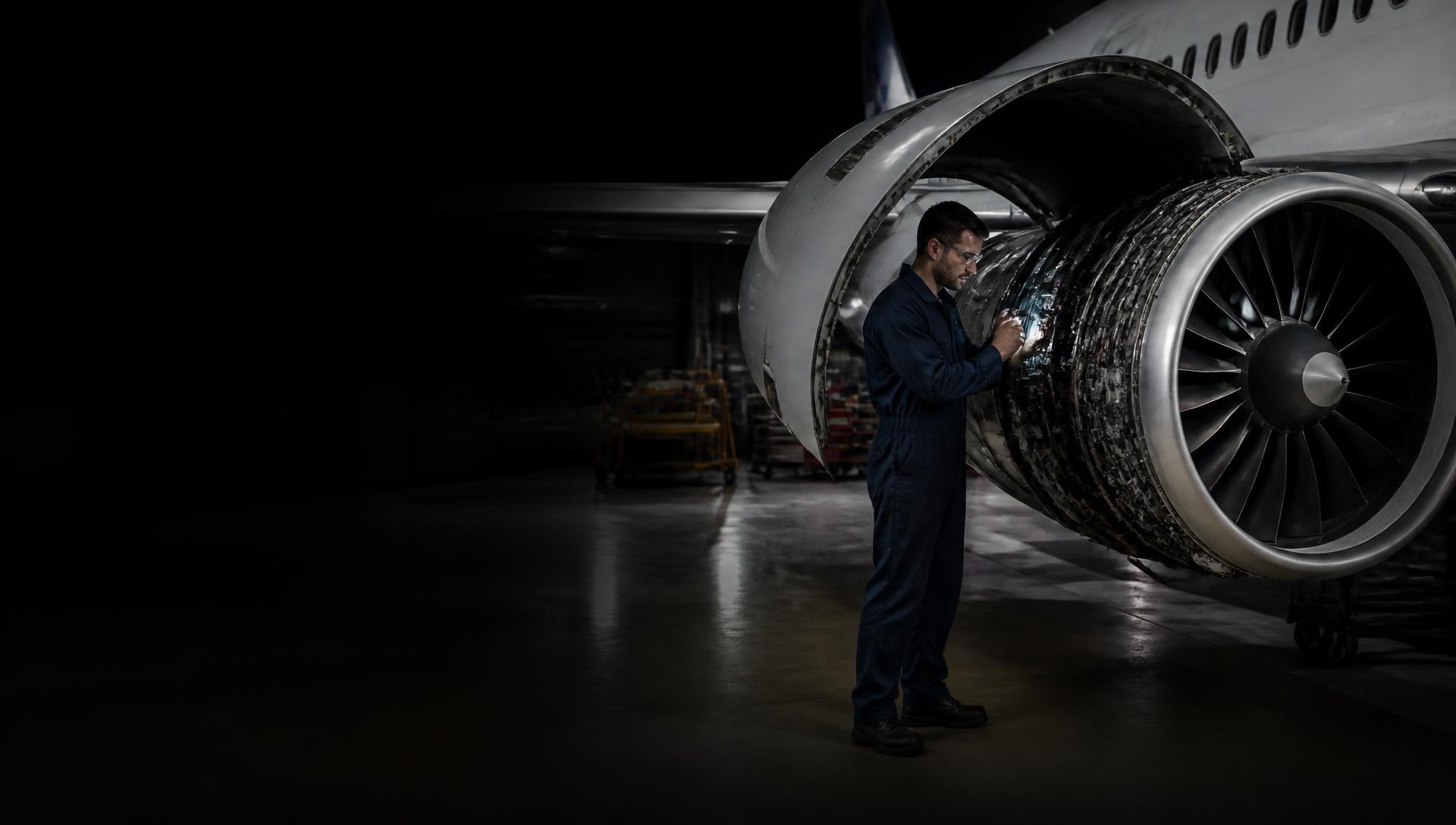
Airframe and Powerplant technician training prepares students to work with the structures, systems, engines, components, materials, tools, and maintenance procedures used in aviation. Programs commonly combine classroom instruction with laboratory and hands-on projects involving actual or representative aircraft systems.
The Airframe rating covers aircraft structures and related systems. The Powerplant rating covers aircraft engines, propellers, and supporting systems. Students seeking both ratings complete general, airframe, and powerplant subject areas.
An FAA-certificated Aviation Maintenance Technician School may issue a certificate of completion for the curriculum it is authorized to provide. When all other eligibility requirements are met, that document may establish eligibility to take the applicable FAA mechanic tests. It is not itself an FAA Aviation Mechanic certificate.
What Do A&P Technician Programs Teach?
General aviation maintenance subject areas form the foundation of both the Airframe and Powerplant curricula. Exact coverage varies by school and FAA authorization.
Maintenance Regulations and Records
Students may learn how to locate, interpret, and apply maintenance regulations, technical publications, manufacturer instructions, airworthiness information, and recordkeeping requirements.
Mathematics and Physics
Programs may cover calculations, measurements, ratios, fluid principles, forces, motion, pressure, temperature, and other technical concepts used in aircraft maintenance.
Materials and Processes
Instruction may include aircraft metals, composites, corrosion, fasteners, tubing, hoses, hardware, nondestructive inspection concepts, and approved repair practices.
Electricity and Electronics
Students may study electrical theory, circuits, batteries, generators, motors, wiring, connectors, troubleshooting, and the safe use of electrical test equipment.
Drawings and Technical Documents
Training may include maintenance manuals, wiring diagrams, schematics, drawings, service information, parts documentation, and regulatory references.
Tools and Precision Measurement
Students may use hand tools, torque tools, gauges, calipers, micrometers, inspection equipment, and other precision instruments.
Safety and Human Factors
Programs may address personal protective equipment, hazardous materials, shop procedures, foreign-object damage prevention, communication, fatigue, documentation, and the consequences of maintenance errors.
Inspection and Troubleshooting
Students may practice systematic inspection, fault isolation, component testing, maintenance documentation, and verifying completed work against required standards.
What Does the Airframe Rating Cover?
Airframe training focuses on aircraft structures and the systems installed in or supported by those structures. Students may learn to inspect, maintain, troubleshoot, repair, and document work involving metal, composite, hydraulic, pneumatic, electrical, control, landing-gear, cabin, and environmental systems.
- Sheet-metal structures and repairs
- Composite materials
- Wood and fabric structures where included
- Aircraft welding concepts
- Assembly and rigging
- Flight-control systems
- Landing gear and brakes
- Hydraulic and pneumatic systems
- Cabin atmosphere and environmental systems
- Aircraft electrical systems
- Position and warning systems
- Fuel systems
- Fire-protection systems
- Ice and rain-control systems
- Communication and navigation-system installation concepts
- Aircraft inspections
Exact equipment and curriculum vary by school and FAA authorization. Ask each school which structures, materials, and systems its students actually work on.
What Does the Powerplant Rating Cover?
Powerplant training focuses on aircraft engines and the systems that support engine operation. Depending on the curriculum, students may work with reciprocating engines, turbine engines, propellers, fuel systems, lubrication, ignition, starting, cooling, exhaust, fire protection, and engine instrumentation.
- Reciprocating-engine theory and construction
- Turbine-engine theory and construction
- Engine inspection and overhaul concepts
- Ignition and starting systems
- Fuel metering and delivery
- Lubrication systems
- Cooling and exhaust systems
- Induction and airflow
- Engine instruments and monitoring
- Propellers and propeller controls
- Engine removal and installation
- Troubleshooting and operational checks
- Maintenance documentation
Not every school trains on every engine or aircraft type. Confirm which engines and components are available in each program's laboratory.
What Is an FAA Part 147 Aviation Maintenance Technician School?
An Aviation Maintenance Technician School is an educational facility certificated by the Federal Aviation Administration under 14 CFR Part 147. An AMTS may be authorized to offer Airframe, Powerplant, or combined Airframe and Powerplant curricula. The school's FAA ratings determine which curricula it may provide and which certificates of completion it may issue.
When all other eligibility requirements are met, an authenticated completion document from the appropriate Part 147 curriculum may establish a graduate's eligibility to test for the corresponding FAA mechanic rating.
Before enrolling, verify the school, campus, and curriculum through current FAA information. Confirm whether the specific location is authorized for Airframe, Powerplant, or both ratings. A general aviation program or test-preparation course is not automatically an FAA-certificated Part 147 curriculum.
How Do You Earn an FAA A&P Certificate?
- Meet the applicable FAA eligibility requirements.
- Establish eligibility through an authorized educational, practical-experience, or qualifying military pathway.
- Apply using the applicable FAA process and obtain an FAA Tracking Number when required.
- Pass the applicable knowledge tests.
- Pass the applicable oral and practical tests administered by an FAA-designated examiner.
- Receive the Aviation Mechanic certificate with the Airframe rating, Powerplant rating, or both.
The Aviation Mechanic certificate has two ratings: Airframe and Powerplant. A person who earns both is commonly called an A&P mechanic. Applicants pursuing both ratings take General, Airframe, and Powerplant knowledge tests, followed by the applicable oral and practical testing.
Current FAA eligibility information includes being at least 18 years old and able to read, write, speak, and understand English. Some exceptions or special circumstances may apply, so review the FAA's complete requirements before making plans. Auto School Guide is not a certification authority.
FAA certification information
Do You Have to Attend an A&P School?
Attending an FAA-certificated Aviation Maintenance Technician School is one route to establishing eligibility for mechanic testing, but it is not the only possible route. Applicants may also qualify through properly documented practical experience or certain qualifying military training.
FAA guidance identifies at least 18 months of qualifying practical experience for a single Airframe or Powerplant rating and at least 30 months of qualifying concurrent experience for both ratings. Experience must be documented and evaluated through the applicable FAA process.
For many students without prior aviation-maintenance experience, attending an FAA-certificated AMTS provides a structured path covering the required subject areas and establishing testing eligibility after successful completion. Informal automotive or general mechanical experience does not automatically satisfy FAA requirements.
How Long Does A&P Training Take?
Program length varies by school, schedule, credential, and whether the student pursues one rating or both. FAA guidance indicates that many Part 147 programs preparing students for Airframe and Powerplant ratings take approximately 18 to 24 months, although actual completion time may differ.
Some schools offer full-time daytime schedules, while others may provide evening or extended formats. Programs connected to community colleges may also include general-education courses leading to an associate degree.
Verify before you enroll
- Total calendar length
- Weekly schedule
- Laboratory hours
- Attendance requirements
- Completion standards
- Included FAA test preparation
- Whether testing is included or separately scheduled
- Additional degree requirements
- Total cost and fees
Career Paths for Airframe and Powerplant Technicians
With appropriate training, testing, certification, and employer qualifications, technicians may work in settings such as:
- Commercial airlines
- General aviation
- Aircraft maintenance and repair facilities
- Fixed-base operators
- Aircraft manufacturing
- Aerospace product and component manufacturing
- Cargo and delivery aviation
- Corporate aviation
- Helicopter maintenance
- Government aviation
- Flight schools
- Engine or component repair facilities
- Field-service operations
Possible job titles
- Aircraft mechanic
- Aircraft maintenance technician
- A&P mechanic
- Airframe technician
- Powerplant technician
- Line-maintenance technician
- Hangar-maintenance technician
- Engine technician
- Component-repair technician
- Aircraft inspector after gaining appropriate experience and authorization
Not every graduate will qualify for every role or employer. Hiring depends on certification, experience, background requirements, and employer standards.
What Is Aircraft Maintenance Work Like?
Aircraft mechanics may work in hangars, repair facilities, manufacturing environments, or outdoors on an airfield. The work can involve climbing, reaching, kneeling, lifting equipment, working in confined areas, and using precision tools while following detailed technical instructions.
Aircraft maintenance must be completed and documented according to applicable procedures and safety requirements. Technicians may work under schedule pressure while still maintaining careful inspection and recordkeeping standards. Depending on the employer, schedules may include nights, weekends, holidays, or extended shifts.
Skills the work requires
- Attention to detail
- Mechanical ability
- Problem-solving
- Reading technical documentation
- Accurate recordkeeping
- Communication
- Manual dexterity
- Safety awareness
- Willingness to continue learning
Aircraft Mechanic Career Outlook
The U.S. Bureau of Labor Statistics reports that aircraft mechanics and service technicians earned a national median annual wage of $79,870 in May 2025. Employment for this occupation is projected to grow 5 percent from 2025 through 2035.
BLS projects approximately 13,100 annual openings for the broader group of aircraft and avionics equipment mechanics and technicians. This combined figure includes both aircraft mechanics and avionics technicians and should not be interpreted as openings exclusively for A&P mechanics.
Actual earnings and job opportunities vary according to certification, experience, location, employer, industry, aircraft type, shift, union status, and other factors. The national median wage is not a guaranteed starting salary.
What Is the Difference Between A&P and Avionics Training?
Airframe and Powerplant training covers aircraft structures, mechanical systems, engines, and supporting systems. Avionics training concentrates more heavily on aircraft electronics, instruments, communication, navigation, wiring, and related electronic systems.
The fields overlap because modern aircraft integrate mechanical, electrical, and electronic systems. However, an avionics program should not automatically be described as an A&P program, and completing avionics training does not automatically provide eligibility for Airframe or Powerplant testing. Students should verify the exact FAA authorization and credential associated with each curriculum.
Related training on Auto School Guide
How to Compare Airframe and Powerplant Schools
- Is the school and campus currently FAA-certificated under Part 147?
- Is the location authorized for Airframe, Powerplant, or both?
- Does the program establish eligibility to take the applicable FAA tests?
- Is the program focused on A&P, avionics, or a broader aviation-maintenance credential?
- What aircraft, engines, components, and laboratory equipment do students use?
- How much individual hands-on training is provided?
- Does the curriculum include both reciprocating and turbine-engine exposure?
- What types of structural and composite work are included?
- Are FAA knowledge-test preparation and practical preparation included?
- Are FAA examination fees included in tuition?
- Are tools, uniforms, books, safety equipment, and materials included?
- Are evening or part-time schedules available?
- Does the program award a certificate, diploma, or associate degree?
- Are transfer credits or general-education courses required?
- What attendance and completion standards apply?
- Are career services available, and what do they include?
- Are completion, testing, certification, and placement statistics current and verifiable?
- What is the refund and cancellation policy?
Ask schools to document their current FAA status, authorized ratings, total program cost, testing arrangements, and employment claims. Avoid assuming that “aviation,” “aircraft maintenance,” or “A&P preparation” automatically means the curriculum is an FAA-certificated Part 147 program.