What Is Electrical, Electronics, and Industrial Technology?
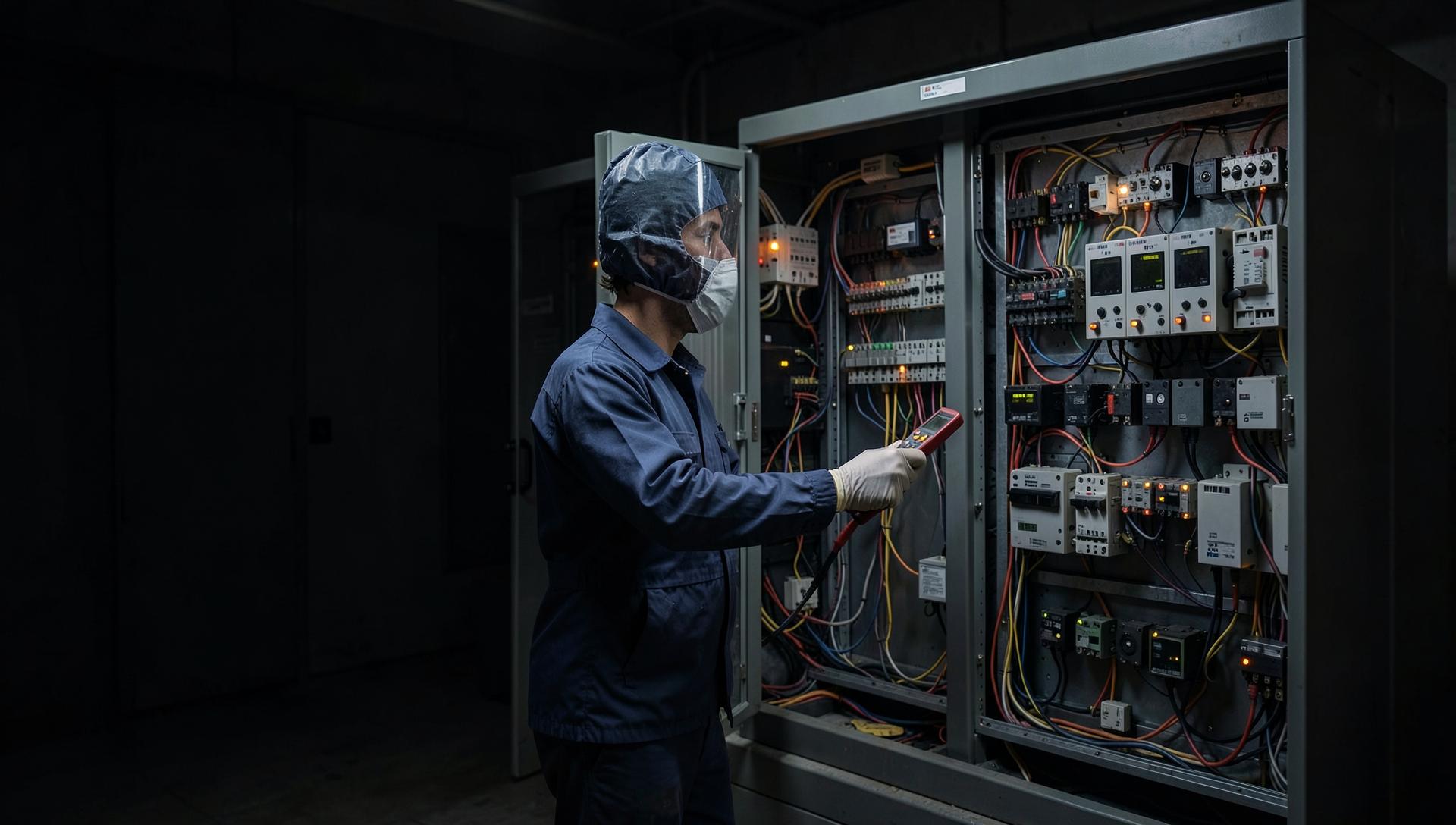
This field covers the practical work of building, testing, maintaining, and troubleshooting electrical and electronic equipment. Depending on the setting, that can mean circuit boards on a bench, motor control centers in a plant, or automated production equipment on a factory floor.
Because the category is broad, programs differ substantially. Some emphasize electronics theory and instrumentation, while others emphasize industrial power, motor controls, and automation.
Related but distinct pathways
- Electrical and electronics technician training: technical programs preparing graduates to test, maintain, and troubleshoot equipment
- Industrial controls and automation training: focused on PLCs, drives, sensors, and process equipment
- Electrician apprenticeship: a regulated pathway toward licensure for residential, commercial, or industrial electrical installation work
- Electrical engineering degrees: four-year and graduate programs leading to engineering roles
Completing a technology program does not automatically make a graduate a licensed electrician or an electrical engineer. Licensure and engineering roles follow separate requirements set by states, licensing boards, and employers.
Electrical Fundamentals
Nearly every program begins with the physics and math that describe circuits, because troubleshooting without fundamentals turns into parts swapping.
- Voltage, current, resistance, and power
- Ohm's law and power calculations
- Series, parallel, and combination circuits
- Direct current and alternating current
- Magnetism and electromagnetic induction
- Inductance, capacitance, and reactance
- Single-phase and three-phase power
- Transformers and power distribution basics
- Grounding and bonding concepts
- Conductors, insulation, and circuit protection
- Schematic and wiring diagram interpretation
Electronic Components and Circuits
Electronics coursework moves from passive components to semiconductors and digital logic, usually with bench work alongside the theory.
- Resistors, capacitors, and inductors
- Diodes, rectifiers, and power supplies
- Transistors and amplification
- Operational amplifiers and signal conditioning
- Digital logic, gates, and number systems
- Microcontroller fundamentals, where offered
- Soldering, desoldering, and board-level repair
- Circuit construction and prototyping
Motors, Drives, and Motor Controls
Motors convert electrical energy into the motion that runs industry, and motor control is one of the most employable skill areas in this field.
- AC induction motors and nameplate data
- Single-phase and three-phase motor connections
- DC motors and their control
- Motor starters, contactors, and overload protection
- Reversing, jogging, and multi-speed control circuits
- Control transformers and pilot devices
- Variable frequency drives and soft starters
- Drive parameters, acceleration, and braking
- Motor testing, insulation resistance, and troubleshooting
Industrial Control Systems
Control systems tie sensing, logic, and actuation together. Students typically learn relay logic first, then move to programmable control.
- Relay logic and control schematics
- Control power, interlocks, and permissives
- Motor control centers and panel layout
- Safety circuits, e-stops, and safety relays
- Process control fundamentals and feedback loops
- Panel wiring practices and labeling
PLCs and Ladder Logic
Programmable logic controllers replaced most hard-wired relay logic in industrial equipment. Ladder logic remains the most widely taught programming language because it maps closely to relay schematics.
- PLC hardware, processors, and I/O modules
- Discrete and analog input and output wiring
- Ladder logic contacts, coils, and branches
- Timers, counters, and comparison instructions
- Math, move, and data-handling instructions
- Program organization and documentation
- Going online, monitoring, and forcing safely
- Fault finding using the program and I/O status
PLC platforms differ between schools and employers. Ask which brands and software versions students use and how much lab time is spent programming and troubleshooting live equipment.
Sensors and Instrumentation
Automated systems need reliable measurement. Instrumentation coursework covers the devices that report position, presence, and process conditions.
- Limit switches and mechanical sensing
- Inductive, capacitive, and photoelectric sensors
- Ultrasonic and proximity sensing
- Temperature sensing with thermocouples and RTDs
- Pressure, level, and flow instrumentation
- Encoders and position feedback
- Analog signal standards such as 4–20 mA
- Calibration, scaling, and loop checks
Troubleshooting and Test Equipment
Systematic troubleshooting is the skill employers ask about most. Programs teach a repeatable method rather than guesswork: verify the complaint, isolate the system, test methodically, confirm the repair, and document it.
- Digital multimeters and safe measurement categories
- Clamp meters and current measurement
- Oscilloscopes and waveform interpretation
- Insulation resistance and continuity testing
- Thermal imaging for hot spots, where available
- Loop calibrators and signal simulators
- Reading prints to trace circuits
- Root-cause analysis and repair documentation
Industrial Networks and Automation
Modern plants connect controllers, drives, sensors, and operator interfaces over industrial networks. Coursework in this area may cover network topologies, addressing, common industrial protocols, human-machine interfaces, and data collection.
Depth varies widely. Some programs offer a full automation track, while others introduce networking briefly within a controls course.
Electrical Safety and Lockout/Tagout
Electrical work carries shock, arc flash, and arc blast hazards. OSHA addresses electrical safety and the control of hazardous energy during servicing and maintenance.
- Shock and arc-flash hazard awareness
- Approach boundaries and personal protective equipment
- Energized versus de-energized work practices
- Lockout/tagout procedures and verification of zero energy
- Stored energy in capacitors, springs, and hydraulics
- Test-before-touch practices
- Machine guarding and confined space awareness
- Documentation and permit practices
Career Paths
Graduates of programs in this category may pursue a range of technical roles, depending on the emphasis of the program and the employer's requirements.
- Electrical or electronics technician
- Industrial maintenance electrician
- Controls or automation technician
- Instrumentation technician
- Field service technician
- Test technician or quality technician
- Panel builder or wiring technician
- Utility or facilities technician
Work settings include manufacturing plants, utilities, equipment manufacturers, service contractors, data centers, transportation systems, and government facilities.
Roles such as licensed electrician and electrical engineer carry their own separate requirements. Ask any school directly how its credential relates to state licensing pathways in your area.
Career Outlook
BLS reports a median annual wage of $78,190 for electrical and electronic engineering technologists and technicians in May 2025, projects about 2 percent employment growth from 2025 through 2035, and projects about 8,100 openings each year on average.
Because this program category feeds several occupations, these figures describe one occupation rather than every outcome available to graduates. Local demand depends on the industrial and utility base in a given region.
How to Compare Programs
Questions to ask before enrolling:
- Does the program emphasize electronics, industrial power, or automation?
- How much lab time is included, and on what equipment?
- Which PLC platforms and software do students use?
- Are motor controls and variable frequency drives taught hands-on?
- Is instrumentation and calibration included?
- What test equipment do students use themselves?
- How is electrical safety and lockout/tagout taught?
- What credential is awarded, and how long does it take?
- Does the program transfer toward a degree?
- Does it count toward any apprenticeship or licensing pathway in this state?
- Are internships or employer partnerships available?
- What is the total cost, including tools and fees?
- Which campus offers the program, and what schedules are available?
Contact this school to verify its current electrical, electronics, controls, and industrial technology curriculum, equipment, credentials, and availability.