Program Overview
Electric and hybrid vehicle technology is the study of vehicles that use electric propulsion, either alone or combined with an internal combustion engine. Training focuses on the components that distinguish these vehicles from conventional ones: high-voltage batteries, electric motors, power electronics, charging systems and the safety procedures required to work around them.
There is no single national format for this training. Schools deliver electrified-vehicle instruction in several different ways, and the depth of coverage differs widely between institutions.
Common ways this training is offered
- A dedicated electric or hybrid vehicle technician program
- A certificate or specialization completed alongside or after an automotive program
- A manufacturer-supported pathway tied to a specific brand's service network
- One or more courses inside a broader automotive technology program
- Continuing education or short courses for technicians already working in the field
Availability, curriculum, training vehicles, laboratory equipment and credentials vary by institution. Confirm with each school what is actually taught, on what vehicles, and how many hours students spend working on electrified systems.
What Students May Learn
Course content differs by program. The subjects below appear across electrified-vehicle training, but no single school necessarily covers all of them, and the time devoted to each varies.
- Electrical fundamentals, circuits, measurement and meter use
- High-voltage vehicle safety practices and personal protective equipment
- Hybrid operating modes and energy management strategies
- Battery construction, cells and modules, and battery management systems
- Electric motors, generators and drive units
- Inverters, converters and other power electronics
- Regenerative braking and its interaction with friction braking
- Charging systems, connectors and onboard charging equipment
- Vehicle communication networks and control modules
- Scan-tool diagnostics, data interpretation and service information research
- Isolation and insulation testing of high-voltage circuits
- Thermal-management systems for batteries and power electronics
- Electrified air-conditioning considerations, including electrically driven compressors
- Safe shutdown, de-energizing and verification procedures
- Conventional brakes, steering, suspension and general automotive fundamentals
Wording such as "may cover" and "can include" is used deliberately here. Ask each school for a current course outline rather than assuming a standard curriculum exists.
How EV Training Differs From Conventional Automotive Training
Electrified vehicles are still vehicles. They retain most of the systems taught in a conventional automotive program, and a technician who cannot service those systems is limited regardless of powertrain.
Systems shared with conventional vehicles
- Brakes, including friction components and hydraulic systems
- Steering and suspension
- Tires, wheels and alignment
- Heating, cooling and climate control
- Low-voltage electrical systems and accessories
- Vehicle communication networks and control modules
- Body, restraint and safety systems
What electrification adds
- High-voltage batteries and their enclosures, cabling and service disconnects
- Electric drive motors and reduction gearing
- Inverters, converters and other power electronics
- Battery management and state-of-charge control
- Battery and power-electronics thermal management
- Charging hardware and charge-control software
- Specialized safety procedures, tools and protective equipment
EV-focused training does not replace broader automotive knowledge. Most programs treat electrified-vehicle work as an addition to automotive fundamentals rather than a substitute for them.
High-Voltage Safety
High-voltage safety is the foundation of any credible electrified-vehicle program. Electrical hazards, including shock and arc flash, are addressed in federal workplace safety guidance, and manufacturers publish specific procedures for their own vehicles.
What responsible training emphasizes
- Recognizing high-voltage components, cabling and warning labels before beginning work
- Following the vehicle manufacturer's published service procedures rather than improvised methods
- Selecting, inspecting and correctly using appropriate personal protective equipment
- Establishing controlled work zones and barriers around energized equipment
- Disabling systems and verifying the absence of voltage before service
- Inspecting, testing and maintaining insulated tools and safety equipment on a schedule
- Working only within one's training, qualification and employer authorization
This page is a program guide, not a repair procedure. High-voltage vehicle systems can cause serious injury or death and should be serviced only by people trained and authorized to do so, following manufacturer instructions.
Batteries, Electric Motors and Power Electronics
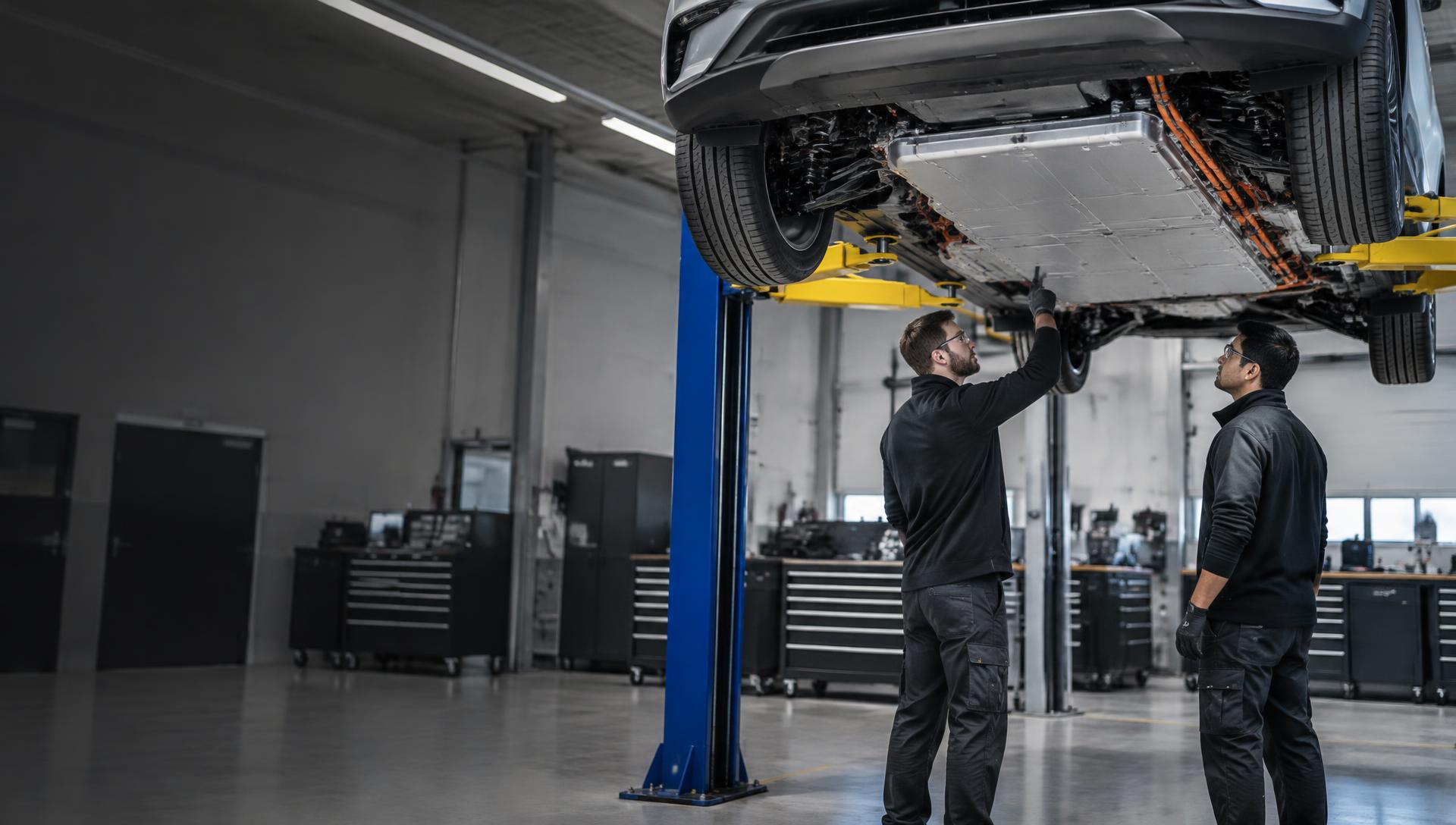
The traction battery stores the energy used for propulsion, the electric motor converts that energy into motion, and power electronics manage the flow between them. Programs that cover these subjects generally combine classroom theory with supervised laboratory work on training vehicles or component trainers.
- Cell chemistries, modules, packs and enclosure design
- Battery management systems, balancing and state-of-charge estimation
- Motor and generator operating principles, including regeneration
- Inverter and DC-to-DC converter function within the powertrain
- Cooling loops, coolant service and temperature control strategies
- Component handling, storage and end-of-life considerations for batteries
The Department of Energy publishes background material on vehicle battery research and technology, and the Environmental Protection Agency publishes guidance on handling and recycling lithium-ion batteries. Both are useful context for students, though neither is a substitute for a manufacturer's service procedures.
Diagnostics, Software and Thermal Management
Much electrified-vehicle service work is diagnostic. Faults often surface as data rather than as visible damage, so programs typically emphasize structured troubleshooting: reading fault codes, interpreting live data, testing circuits and confirming the repair.
- Scan-tool operation and manufacturer diagnostic software
- Interpreting live data from battery, motor and charging systems
- Network communication faults and module configuration
- Insulation resistance and isolation testing within a safe procedure
- Charging faults, both onboard and at external equipment
- Thermal-management diagnosis, including coolant circuits and pumps
- Software updates and calibration where a manufacturer provides them
Diagnostic capability depends heavily on shop equipment. Ask which scan tools, service-information subscriptions and training vehicles students actually use.
Hybrid Vehicle Systems
Hybrid vehicles combine an internal combustion engine with one or more electric motors. Because both powertrains are present, hybrid service work requires conventional engine knowledge in addition to high-voltage skills.
- Engine, fuel and emissions service alongside electric-drive components
- Operating modes, including engine-off operation and transitions
- Energy management and how the vehicle decides which source to use
- Regenerative braking and blended braking behavior
- Plug-in hybrid charging and the additional systems it introduces
- Battery service and support systems specific to hybrid packs
Training Formats and Program Types
Format matters as much as subject matter in a hands-on field. Programs differ in length, schedule, laboratory time and how much of the coursework is delivered online.
- Full-length certificate, diploma or degree automotive programs with electrified-vehicle coursework
- Short specializations or add-on certificates focused on EV and hybrid systems
- Manufacturer-supported programs tied to a brand's dealer network
- Continuing education and refresher courses for working technicians
- Blended formats that combine online theory with scheduled laboratory sessions
Theory can be taught online; high-voltage laboratory work cannot. Confirm how many supervised hours students spend on actual electrified vehicles or component trainers.
Credentials and Continuing Education
Several kinds of credential appear in this field, and they are not interchangeable. Understanding the difference makes it easier to compare programs honestly.
- A school certificate, diploma or degree documents completed education at that institution
- An industry certification, such as those administered by ASE, is earned by passing tests and meeting separate work-experience requirements
- A safety-training certificate documents completed safety instruction, not general competence in vehicle repair
- Manufacturer-specific training qualifies a technician to work on that brand under that manufacturer's program
- A state occupational license, where a state requires one, is issued by a government agency and is separate from all of the above
ASE administers automotive certification tests and publishes its own work-experience requirements. Organizations such as the National Alternative Fuels Training Consortium publish alternative-fuel and electric-drive training information. Some manufacturers operate their own training programs for their service networks.
No single credential is universally required nationwide to work on electrified vehicles. Requirements depend on the employer, the manufacturer and the state. Verify current requirements directly with the certifying organization and prospective employers.
Career Settings and Occupational Outlook
Technicians who work on electrified vehicles are generally employed in the same settings as other automotive technicians, including franchised dealerships, independent repair shops, fleet operations, and service and mobility companies. Some roles sit outside vehicle repair entirely, in battery handling, charging infrastructure or manufacturing support.
The Bureau of Labor Statistics reports wage and employment projections for automotive service technicians and mechanics as a single occupation. It does not publish a separate national occupation category exclusively for electric or hybrid vehicle technicians, so no verified EV-only national wage, demand or growth figure is available from that source.
Auto School Guide does not publish EV technician salary figures, EV-only job-growth rates, placement rates, graduate outcomes or employer demand numbers, because no authoritative national source publishes them. Treat any such figure you encounter with caution and ask for its source.
How to Evaluate an EV or Hybrid Program
Because this training is new relative to conventional automotive education, marketing language often runs ahead of curriculum. Specific questions produce more useful answers than general ones.
- Is electrified-vehicle content a dedicated program, a specialization or a few courses?
- How many clock hours involve hands-on work on high-voltage systems?
- What electrified training vehicles and component trainers are available, and how many students share them?
- What scan tools and service-information subscriptions do students use?
- Is high-voltage safety instruction formalized, and is protective equipment provided?
- What are the instructors' qualifications and recent industry experience?
- Does the program prepare students for any specific certification, and is that stated in writing?
- Are conventional automotive fundamentals included or assumed as a prerequisite?
- What is the total cost, including tools, fees and required equipment?
- What are the admissions requirements, schedule options and refund policy?
Tour the lab while classes are running if you can. Equipment condition and hands-on time per student are far easier to judge in person.
Who This Training May Suit
Electrified-vehicle training tends to suit people who enjoy methodical diagnosis, electrical measurement and following precise procedures, and who are comfortable with the discipline that high-voltage work requires.
- Students entering automotive service who want exposure to electrified powertrains
- Working automotive technicians adding electrified-vehicle capability
- People with electrical or electronics backgrounds moving toward vehicle work
- Technicians whose employers service hybrid or electric fleets
Students weighing broader options may also want to compare general automotive technology programs and electrical, electronics and industrial technology programs before deciding.