What Is Wind Turbine Technician Training?
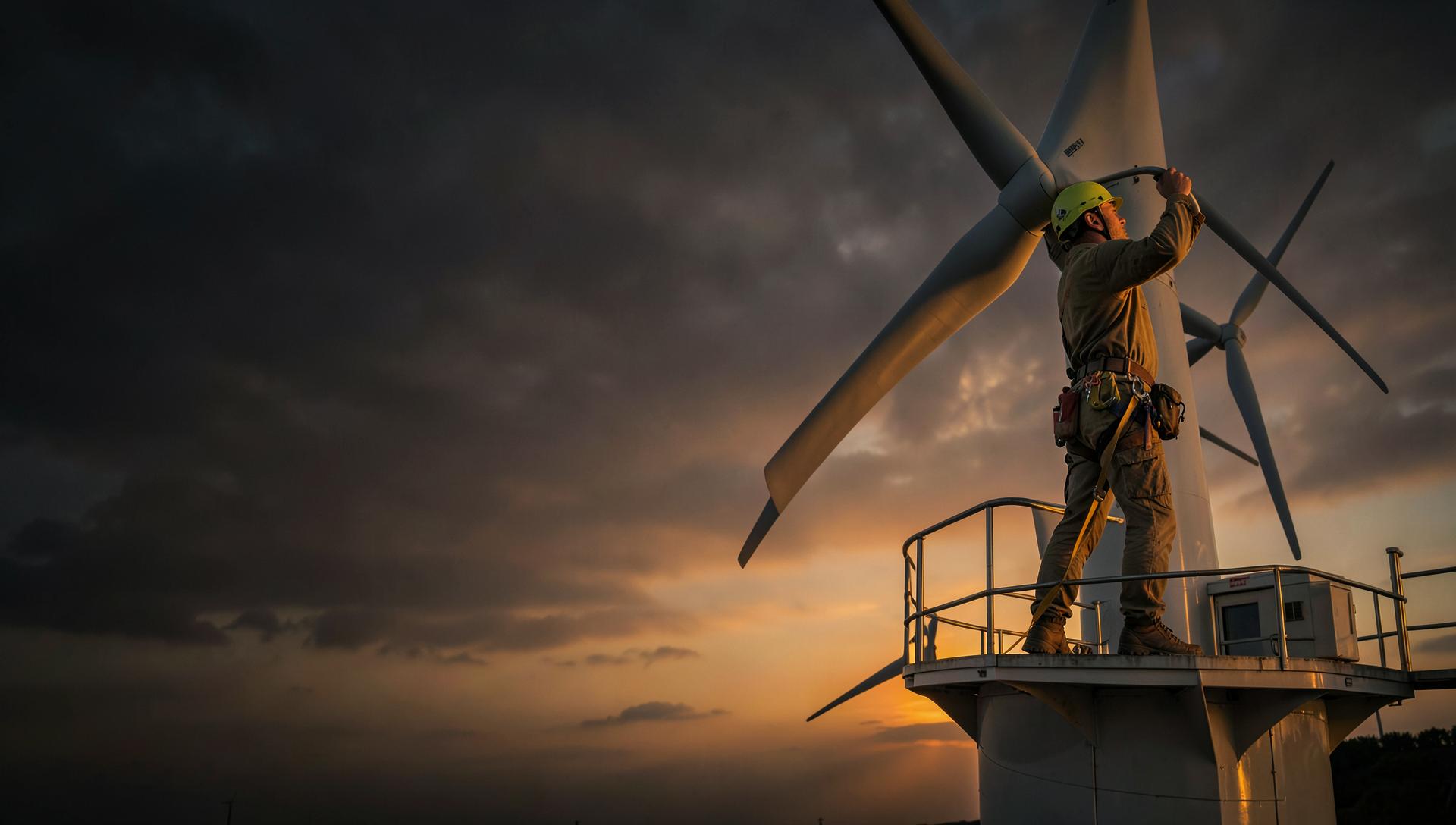
Wind turbine technician training prepares students to service utility-scale wind turbines: the mechanical drivetrain, the electrical generation and control systems, hydraulic systems, and the safety equipment required to work hundreds of feet in the air.
The work is a blend of trades. A technician may torque bolted connections, replace a hydraulic hose, troubleshoot a converter fault, and interpret SCADA data during the same outage.
BLS describes wind turbine service technicians, often called windtechs, as workers who install, maintain, and repair wind turbines.
Wind Turbine Components
Programs begin with the machine itself, so students can locate systems and understand how a fault in one affects the others.
- Rotor and blades
- Hub and blade root connections
- Pitch system that adjusts blade angle
- Main shaft and main bearing
- Gearbox, where the design includes one
- Direct-drive configurations without a gearbox
- Generator and power conversion equipment
- Mechanical and aerodynamic braking systems
- Yaw system that turns the nacelle into the wind
- Nacelle structure, cooling, and lifting equipment
- Tower sections, ladders, and internal cabling
- Foundation and transition components
- Transformer and electrical collection equipment
Mechanical Power Systems
Mechanical instruction focuses on the drivetrain and the bolted, lubricated, and rotating components that carry enormous loads.
- Bearings, shafts, and couplings
- Gearbox stages, inspection, and oil condition
- Lubrication systems, filtration, and sampling
- Bolted joint theory and torque procedures
- Torque and tension tooling, hydraulic and manual
- Alignment and runout concepts
- Brake systems and inspection
- Vibration awareness and condition monitoring
- Component replacement and rigging within the nacelle
Electrical Systems and Controls
A turbine is a power plant. Electrical instruction covers generation, conversion, protection, and the control systems that keep the machine within safe operating limits.
- Electrical fundamentals and three-phase power
- Generators and power conversion equipment
- Transformers and medium-voltage awareness
- Switchgear, breakers, and protective devices
- Cabinets, wiring, and cable management
- Control systems, PLCs, and turbine controllers
- Pitch and yaw control electronics
- Grounding, bonding, and lightning protection
- Meters, test equipment, and safe measurement
- Reading electrical prints and turbine documentation
Hydraulics
Hydraulic systems operate brakes, pitch mechanisms, and other high-force functions inside the turbine, and they store energy even when the machine is stopped.
- Pressure, flow, and force principles
- Pumps, valves, cylinders, and accumulators
- Reading hydraulic schematics
- Hoses, fittings, and leak repair
- Fluid condition, filtration, and contamination control
- Pressure testing and adjustment
- Stored energy hazards and safe depressurization
Sensors, SCADA, and Diagnostics
Wind sites are monitored remotely. Technicians often arrive at a turbine already knowing which fault code brought it offline, then confirm the cause on site.
- Anemometers, wind vanes, and met data
- Temperature, pressure, and vibration sensors
- Position and speed feedback devices
- SCADA systems and remote monitoring
- Fault codes, alarm history, and event logs
- Trend data and condition-based maintenance
- Systematic troubleshooting and root-cause analysis
- Work orders, reporting, and documentation
Inspection and Preventive Maintenance
Scheduled maintenance is the core of the job. Turbines receive periodic service visits with defined checklists, torque verification, lubrication, and inspection tasks.
- Scheduled service intervals and checklists
- Bolt torque verification and marking
- Greasing, oil changes, and filter service
- Blade visual inspection from the hub and ground
- Electrical connection inspection and thermal checks
- Brake, hydraulic, and safety system checks
- Housekeeping, oil containment, and site environmental practices
- Completing and filing service documentation
Tower Climbing, Working at Height, and Rescue
Climbing is not incidental to this job; it is a daily requirement. OSHA provides fall protection requirements and wind-energy specific hazard guidance.
Climbing and fall protection
- Full-body harnesses, lanyards, and connectors
- Ladder safety systems and climb-assist devices
- Vertical and horizontal lifelines
- Anchor points and 100 percent tie-off practice
- Equipment inspection before each use
- Tool tethering and dropped-object prevention
- Service lifts, where installed
Rescue and emergency response
- Self-rescue and controlled descent devices
- Assisted rescue of an injured coworker
- Suspension trauma awareness
- Rescue planning before work begins
- Communication and emergency notification
- First aid and CPR, where included
Other hazards
- Confined or restricted work areas inside the nacelle and hub
- Electrical and arc flash hazards
- Lockout/tagout and stored energy
- Rotating equipment and pinch points
- Weather exposure, heat, cold, and lightning
- Remote-site emergency response times
Wind Technician Work Environment
This job differs from shop-based trades in ways worth understanding before enrolling.
- Climbing towers that are often 200 to 300 feet or more
- Working in confined nacelle and hub spaces
- Outdoor conditions, wind, heat, and cold
- Sites in rural areas, sometimes far from towns
- Travel assignments and per-diem work, in some roles
- On-call and outage schedules
- Physical requirements including lifting and climbing capacity
- Weight limits associated with climbing and rescue equipment
- Team-based work with strict safety protocols
Ask each school about the physical demands of its climbing coursework, medical or fitness expectations, and any equipment weight limits before enrolling.
Career Paths
Employers include turbine manufacturers, independent service providers, wind farm owners and operators, utilities, and specialty contractors handling blade repair or major component exchange.
- Wind turbine service technician performing scheduled and corrective maintenance
- Traveling or troubleshooting technician handling complex faults
- Commissioning technician bringing new turbines online
- Blade repair technician, a specialized rope-access or platform role
- Site lead or maintenance supervisor with experience
- SCADA or condition-monitoring technician
- Safety, quality, or training roles within a service organization
Related renewable-energy roles include solar technicians and substation or high-voltage technicians, which are separate fields with their own training requirements.
Career Outlook
BLS reports a median annual wage of $64,120 for wind turbine service technicians in May 2025, projects 30 percent employment growth from 2025 through 2035, and projects about 1,500 openings each year on average.
A 30 percent growth rate applied to a small occupation still produces a modest number of jobs, and those jobs concentrate where wind development is active. Strong national growth is not a guarantee of local openings.
How to Compare Programs
Questions worth asking each school:
- Is climbing and rescue training included, and on what structure?
- Does the school have a training tower or nacelle trainer?
- What safety credentials, if any, does the program include?
- How much hands-on lab time is included?
- Are hydraulics, electrical, and controls each taught with live trainers?
- Is torque and bolting procedure taught with real tooling?
- Is SCADA and fault-code troubleshooting covered?
- What are the physical requirements or equipment weight limits?
- Are medical or fitness screenings required?
- What credential is awarded, and how long does it take?
- Are internships or employer partnerships available?
- Is climbing gear and PPE included in the cost?
- What is the total cost, including fees?
- Which campus offers the program, and what schedules are available?
Contact this school to verify its wind-energy curriculum, climbing and rescue training, equipment, credentials, schedules, costs, and availability.