What Is Rigging and Signalperson Training?
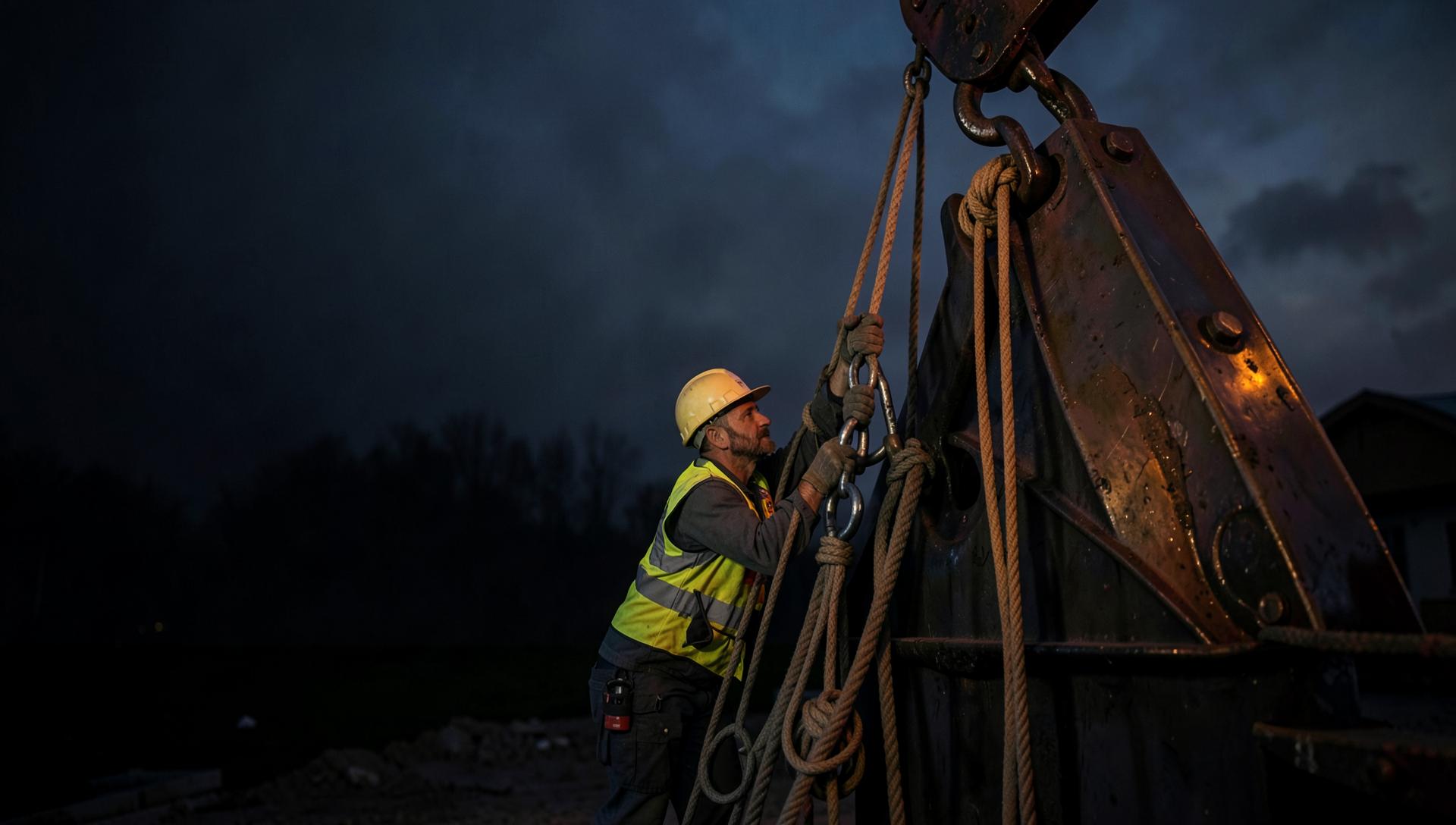
Rigging training teaches workers how to attach a load to a lifting device safely: estimating weight, finding the center of gravity, selecting hardware with adequate capacity, protecting slings, and controlling the load in motion.
Signalperson training covers the communication side of the same lift. A signal person directs the operator when the operator cannot see the load or the landing area, using standard hand signals, radio, or other agreed methods.
These are safety-critical support roles on construction sites and in industrial plants. They are separate from operating the crane itself, though many workers hold more than one qualification.
Rigging Hardware and Slings
Hardware selection begins with knowing the rated capacity of every component in the load path and the conditions that reduce it.
Sling types
- Wire rope slings
- Alloy steel chain slings
- Synthetic web slings
- Round slings
- Metal mesh slings
- Single-leg, bridle, basket, and choker configurations
Hardware
- Shackles and pin types
- Hooks, latches, and swivel hooks
- Eyebolts, hoist rings, and lifting lugs
- Turnbuckles, links, and rings
- Spreader and equalizer beams
- Softeners, corner protection, and wear pads
- Below-the-hook lifting devices
Training emphasizes reading identification tags, respecting rated capacity, avoiding modification, and never assuming that similar-looking components have the same rating.
Load Weight and Center of Gravity
Every rigging decision starts with the weight of the load and where that weight acts. Guessing produces overloaded hardware and unstable lifts.
- Using shipping documents, drawings, and nameplates
- Calculating weight from material and volume
- Accounting for attached components, contents, and water
- Locating the center of gravity
- Keeping the hook directly above the center of gravity
- Recognizing loads that will tip, roll, or shift
- Adjusting attachment points for balance
- Planning for loads with unknown or uncertain weight
Sling Angles and Load Control
Sling tension rises sharply as the angle from horizontal decreases. Two slings sharing a load do not each carry half the weight unless they hang vertically.
- Sling angle and tension relationships
- Reduced capacity in choker and basket hitches
- Load-angle factors and capacity charts
- Even loading across multiple legs
- Edge protection where slings bend over corners
- D/d ratios and bending over small radii
- Tag lines for controlling rotation and swing
- Avoiding shock loading and side loading
Inspection and Removal From Service
Rigging gear is consumable. Inspection before each use, plus documented periodic inspection, is standard practice on well-run sites.
- Missing or illegible identification tags
- Broken wires, kinks, birdcaging, and corrosion in wire rope
- Stretched, gouged, cracked, or heat-damaged chain links
- Cuts, holes, abrasion, melting, and chemical damage in synthetics
- Distorted, cracked, or worn hooks and shackles
- Opened throat or bent hooks
- Damaged latches and missing pins
- Documentation of inspections and removals
Damaged rigging is removed from service and either repaired by a qualified person or destroyed so it cannot be reused. Training emphasizes that a damaged sling never gets 'one more lift.'
Standard Hand Signals
Standard hand signals give operators consistent direction across employers and sites. OSHA addresses signal requirements in the construction cranes and derricks standard.
- Hoist, lower, and stop
- Emergency stop, recognized from any worker
- Raise and lower boom
- Extend and retract telescoping boom
- Swing direction
- Travel and dog everything
- Use main hoist and use whip line
- Move slowly signals
Training covers when a signal person is required, maintaining a single point of communication, keeping the signal person visible and in a safe position, and confirming the signal system before the lift begins.
Radio and Voice Communication
Voice signals are common on long lifts, blind picks, and multi-crane work. They carry their own discipline requirements.
- Establishing a dedicated channel and testing it before the lift
- Identifying the crane, signal person, and function in each transmission
- The function, direction, distance, and stop pattern
- Confirming receipt and acknowledging commands
- Handling loss of communication by stopping the lift
- Managing background noise and hearing protection
- Avoiding channel sharing with unrelated traffic
Qualified Rigger and Signalperson Requirements
Qualified rigger
OSHA's qualified rigger fact sheet explains that a qualified rigger is a rigger who meets the criteria for a qualified person, and that a qualified rigger is determined based on the ability to perform the rigging for the particular work being done. There is no single universal card that makes someone a qualified rigger for every load.
Signalperson qualification
Under OSHA 1926.1428, the employer must ensure the signal person is qualified through either a qualified third-party evaluator or a qualified employer evaluator, and documentation of that qualification must be available at the site.
Practical implications:
- Course completion is not automatically universal qualification
- Qualified-rigger status depends on knowledge, experience, and ability for the particular work
- Employers remain responsible for required qualification and documentation
- Signalperson evaluation may be performed by a qualified third-party evaluator or a qualified employer evaluator under applicable OSHA rules
- Sites and employers may add their own requirements beyond the federal minimum
Rigging Training vs. Crane Operator Training
These are different training pathways with different requirements, even though the workers involved share the same lift.
- Crane operator training prepares someone to run the machine, read load charts, and control the crane
- Rigging training prepares someone to attach, protect, and control the load
- Signalperson training prepares someone to direct the operator using an agreed signal system
- Each role carries its own qualification, evaluation, and documentation expectations
A rigging or signalperson course does not qualify a worker to operate a crane, and a crane operator credential does not automatically make someone a qualified rigger or signal person.
Worksite and Suspended-Load Safety
Struck-by and caught-between incidents dominate lifting injuries. Rigging and signalperson training is largely safety training.
- Keeping personnel out from under suspended loads
- Establishing and enforcing exclusion zones
- Pinch points, crush hazards, and hand placement
- Swing radius awareness and barricading
- Power line clearance and electrocution hazards
- Wind, weather, and load surface area
- Landing zones, blocking, and load stability after set
- Pre-lift meetings, lift plans, and stop-work authority
- Personal protective equipment and site orientation
How to Compare Training Providers
Questions worth asking each provider:
- Does the course cover rigging, signalperson, or both?
- How long is the course, and how is time split between classroom and practical work?
- Is there a hands-on practical evaluation with real hardware?
- Which sling types and hardware do students handle?
- Are load weight and center-of-gravity calculations practiced?
- Is inspection and removal-from-service taught with damaged samples?
- Are standard hand signals practiced with an actual crane?
- Is a written and practical examination included?
- Does the provider offer third-party evaluation, or only training?
- What documentation do students receive at completion?
- How does the provider describe employer recognition of its credential?
- Are refresher or renewal courses offered?
- What are the eligibility and language requirements?
- What is the total cost, including examination and retest fees?
Contact this provider to verify current rigging and signalperson course content, practical evaluations, equipment, schedules, costs, and employer-recognition details.