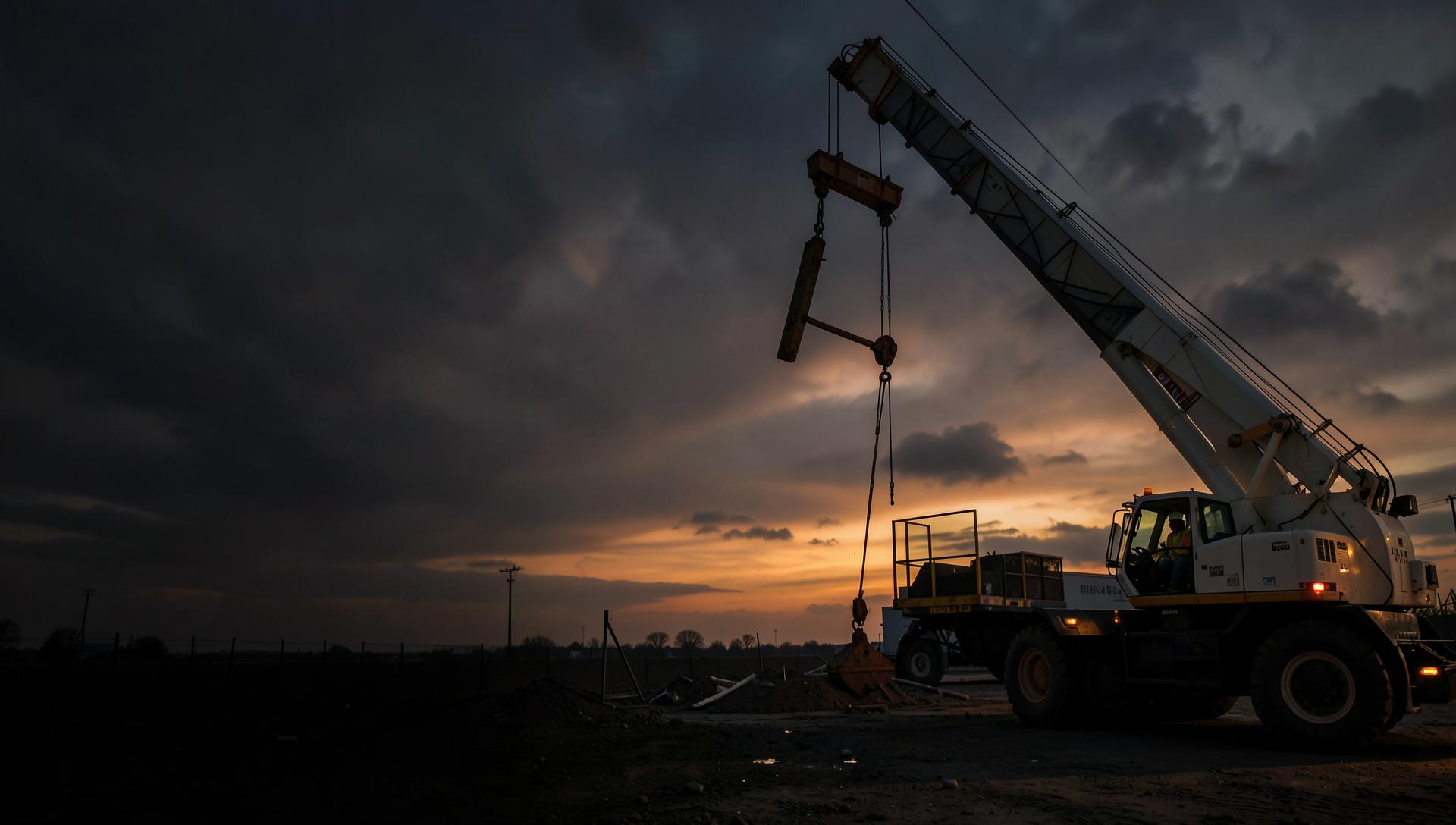
What Is Crane Operator Training?
Crane operator training prepares workers to plan, set up, and control lifts using powered lifting equipment. It combines classroom instruction on capacity, physics, and regulation with supervised time on the controls.
Training is not only about moving a lever. Operators evaluate ground conditions, configure the machine, read load charts, coordinate with riggers and signalpersons, and stop work when conditions change.
OSHA's construction cranes and derricks standard addresses operator training, certification, and evaluation, along with signal person qualifications and other lifting requirements.
What Do Crane Operator Programs Teach?
Program content varies, but instruction may include:
- Crane nomenclature and machine components
- Pre-operational and periodic inspection
- Site assessment and ground bearing conditions
- Outrigger, mat, and cribbing setup
- Load charts, capacity, and configuration
- Load weight estimation and center of gravity
- Operating radius, boom angle, and boom length
- Load moment indicators and anti-two-block devices
- Basic rigging principles and hardware
- Standard hand signals and radio communication
- Power line clearance and electrocution hazards
- Wind, weather, and dynamic loading
- Smooth control of hoisting, swinging, and travel
- Lift planning and critical lifts
- Shutdown, securing, and transport considerations
- Documentation and recordkeeping
Not every provider teaches every crane type or every topic at the same depth. Verify the specific curriculum and equipment with each school.
Crane Types and Configurations
Lifting equipment covers a wide range of machines, and qualification on one does not automatically transfer to another.
- Mobile hydraulic cranes such as rough-terrain and all-terrain machines
- Boom truck and carrier-mounted cranes
- Crawler cranes with lattice or telescoping booms
- Tower cranes used on multi-story construction
- Overhead and gantry cranes in industrial plants
- Articulating (knuckle-boom) cranes
- Service and pedestal cranes in specialized settings
A school categorized under Crane Operator Training may not teach every crane type. Ask which machines students actually operate and in what configurations.
Load Charts, Capacity, and Operating Radius
A load chart is the manufacturer's statement of what a specific crane can lift in a specific configuration. Capacity is not a single number; it changes with boom length, boom angle, operating radius, counterweight, outrigger position, and attachments.
Load chart instruction typically covers:
- Reading capacity tables and range diagrams
- Gross capacity versus net capacity after deductions
- Deductions for block, ball, jib, rigging, and stowed attachments
- Radius measurement and load-radius relationships
- Structural versus stability-limited capacity
- Over-the-side, over-the-rear, and quadrant limits
- Configuration notes and manufacturer restrictions
Operators are expected to work from the chart for the exact machine and configuration in front of them, not from memory or from a similar machine.
Inspection and Setup
Inspection is a routine, documented part of crane work. Programs commonly cover shift, monthly, and annual inspection concepts, and what conditions require removal from service.
Setup topics may include:
- Assessing ground conditions, slopes, voids, and underground utilities
- Selecting and placing mats, cribbing, and pads
- Full and partial outrigger deployment and its effect on capacity
- Leveling the machine within manufacturer limits
- Establishing swing radius barricades
- Identifying overhead power lines and required clearances
- Confirming safety devices and operational aids are functional
Rigging and Load Control
Crane operators work alongside riggers, and many programs include rigging fundamentals so operators understand what is attached to the hook.
- Sling types, capacities, and inspection
- Shackles, hooks, eyebolts, and hardware ratings
- Sling angles and their effect on tension
- Center of gravity and load balance
- Tag lines and load control
- Avoiding side loading and shock loading
- Preventing personnel from working under suspended loads
Rigging content within a crane course is not the same as a dedicated rigger or signalperson qualification. Those are separate training and qualification pathways.
Signals and Communication
Lifts depend on clear communication. OSHA addresses signal person qualifications and requires that the signals used be understood by the operator and the signal person.
- Standard hand signals for hoisting, booming, swinging, and stopping
- When a signal person is required
- Radio and voice communication discipline
- Single-point-of-communication practices
- Emergency stop signals from any worker
- Confirming the signal system before the lift begins
Crane Operator Certification and Employer Evaluation
Certification, licensing, employer evaluation, and equipment-specific qualification are different requirements, and they can all apply to the same worker.
- Certification generally comes from an accredited testing organization and involves written and practical examinations
- Employer evaluation is a separate determination that an operator can safely operate the specific equipment for the assigned work
- Some states and cities license crane operators independently of federal requirements
- Employers and sites may add their own qualification, orientation, or equipment-specific requirements
Completing a course does not automatically make someone legally qualified to operate every crane. Requirements vary by crane, employer, jurisdiction, and work environment. Verify what a program does and does not include.
Construction Crane Safety
Crane incidents tend to involve contact with power lines, loss of stability, structural failure, dropped loads, or workers struck by loads or booms.
Safety instruction commonly addresses:
- Minimum clearance from energized power lines
- Stability, tipping, and two-blocking
- Struck-by and crush hazards in the swing radius
- Suspended-load control and exclusion zones
- Wind speed limits and weather stoppage
- Assembly and disassembly hazards
- Stop-work authority when conditions change
Careers for Trained Crane Operators
Crane operators work in construction, crane rental and lifting services, industrial plants, ports and terminals, utilities, energy, shipyards, steel erection, and heavy transport.
Related roles include rigger, signalperson, oiler or apprentice operator, lift director, crane inspector, and crane service technician. These are distinct roles with distinct qualification requirements.
Work often involves outdoor conditions, early start times, travel between sites, and periods of intense concentration.
Crane Operator Career Outlook
BLS reports a median annual wage of $68,080 for crane and tower operators in May 2025. For the broader material moving machine operators group, BLS projects about 1 percent growth from 2025 through 2035 and about 70,700 openings each year on average.
The growth and openings figures describe the broader group and should not be read as crane-operator-specific projections. Local demand depends on construction and industrial activity in a given area.
How to Compare Crane Operator Schools
Questions worth asking before enrolling:
- Which crane types and configurations do students operate?
- How many hours of actual seat time are included?
- How many students share each machine?
- Is load chart instruction hands-on and machine-specific?
- Does the course prepare students for a specific certification examination?
- Is the certification exam included in the price, or separate?
- Are written and practical exams administered on site?
- Is rigging or signalperson training included or offered separately?
- What are the eligibility, age, medical, or documentation requirements?
- Are there physical requirements for climbing or working at height?
- What is the total cost, including exam and retest fees?
- How long is the course, and what schedules are available?
- How does the provider describe employer recognition of its training?
Contact this school to confirm available crane types, hands-on operating time, certification preparation, schedules, eligibility requirements, and costs.