What Is Heavy Equipment Technology?
Heavy equipment technology is the study of systems used to inspect, maintain, diagnose, and repair large mobile machinery.
Equipment may include:
- Excavators
- Bulldozers
- Wheel loaders
- Backhoes
- Motor graders
- Skid-steer loaders
- Compactors
- Cranes
- Forklifts and material-handling equipment
- Tractors
- Harvesters
- Logging equipment
- Mining equipment
O*NET describes mobile heavy equipment mechanics as workers who diagnose, adjust, repair, or overhaul mobile mechanical, hydraulic, and pneumatic equipment such as cranes, bulldozers, graders, and conveyors used in construction, logging, and mining.
What Do Heavy Equipment Technicians Do?
Depending on their training and employer, technicians may:
- Inspect equipment for wear, leakage, damage, and performance problems
- Perform scheduled preventive maintenance
- Diagnose mechanical, hydraulic, pneumatic, and electrical faults
- Read service manuals and technical schematics
- Test pressures, electrical signals, and operating performance
- Repair or replace pumps, valves, cylinders, hoses, and motors
- Service engines, cooling systems, and fuel systems
- Repair transmissions, final drives, axles, and differentials
- Inspect tracks, rollers, sprockets, tires, and undercarriages
- Service steering, braking, and suspension systems
- Diagnose electronic control systems
- Calibrate sensors and control functions
- Weld or fabricate components when trained and authorized
- Test machinery after repair
- Document inspections, measurements, parts, and completed work
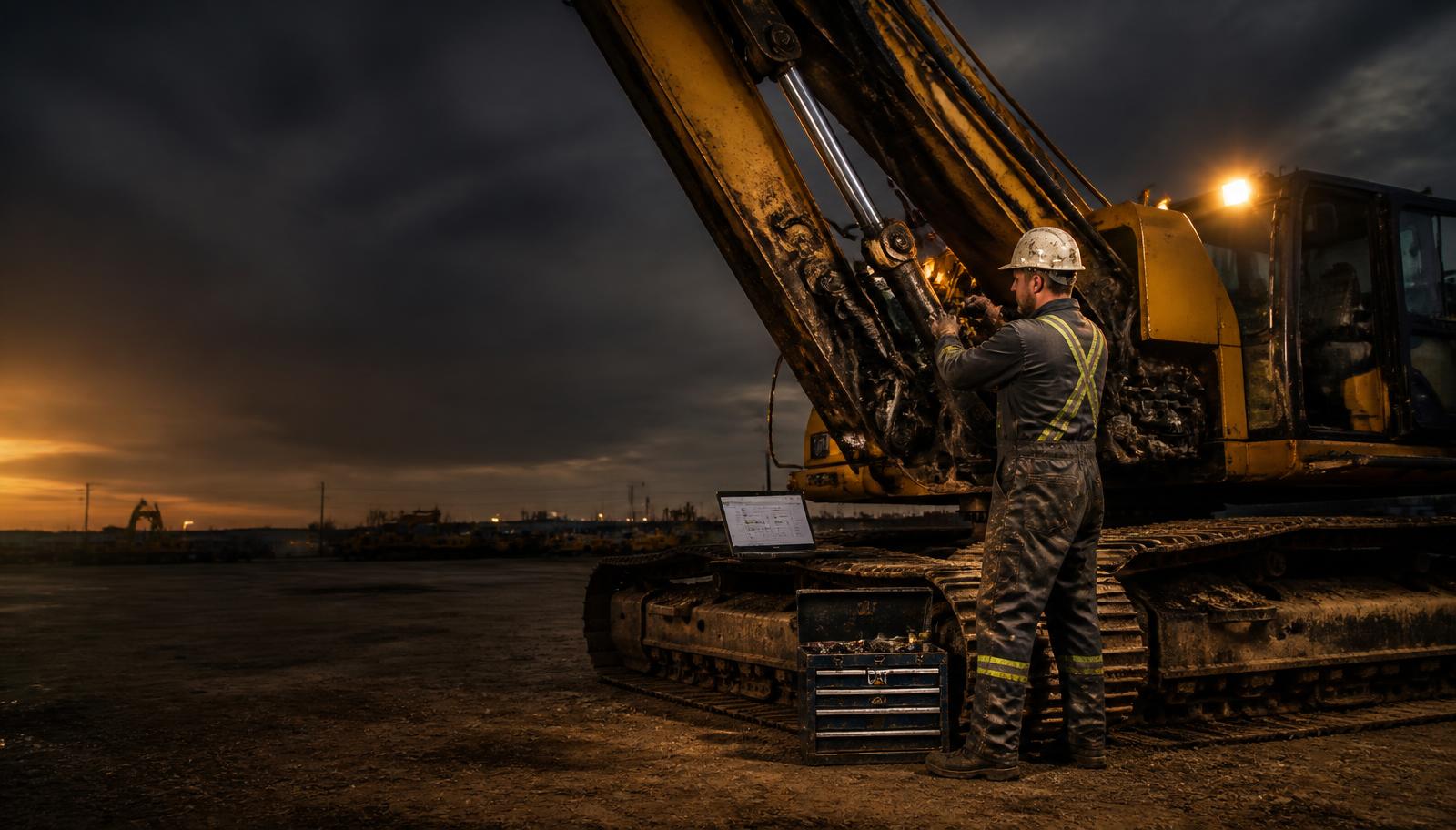
Some technicians work in a central shop. Field technicians travel to machines located at construction sites, farms, mines, logging areas, rail facilities, or other locations.
What Can You Learn?
Heavy equipment coursework may include:
- Shop and field safety
- Hand, power, and precision tools
- Preventive maintenance
- Diesel-engine fundamentals
- Fuel, cooling, lubrication, and air-induction systems
- Electrical theory and circuit diagnosis
- Batteries, starting, and charging
- Electronic control systems
- Computerized diagnostics
- Hydraulic principles
- Hydraulic pumps, valves, cylinders, and motors
- Pneumatic systems
- Brakes and steering
- Transmissions and torque converters
- Drivelines, axles, and final drives
- Tracks, tires, and undercarriages
- Equipment inspection
- Technical manuals and schematics
- Welding and fabrication fundamentals, when included
- Air conditioning, when included
- Service documentation
- Field-service procedures
Not every school covers every equipment type or system. Verify the curriculum and hands-on hours directly with each school.
Hydraulics and Fluid Power
Hydraulic systems allow heavy machines to lift, push, dig, steer, and control attachments.
Training may cover:
- Fluid-power principles
- Pressure and flow
- Pumps and motors
- Cylinders
- Directional, pressure, and flow-control valves
- Reservoirs and filtration
- Hoses, fittings, and seals
- Hydraulic schematics
- Pressure testing
- Contamination control
- Leakage diagnosis
- Safe release of stored pressure
Hydraulic systems can retain energy even when a machine is shut down. Training should emphasize manufacturer procedures and proper control of stored energy before servicing.
Mechanical and Powertrain Systems
Heavy equipment uses systems designed to operate under substantial loads and demanding conditions.
Students may study:
- Diesel engines
- Torque converters
- Powershift and hydrostatic transmissions
- Differentials and planetary final drives
- Track and wheel systems
- Steering systems
- Service and parking brakes
- Cooling and lubrication
- Attachments and work tools
- Structural pins, bushings, and linkages
Program depth varies by the types of machinery and components available in the training laboratory.
Electronics and Computerized Diagnostics
Modern equipment may use:
- Electronic control modules
- Sensors and actuators
- Equipment communication networks
- Electronic hydraulic controls
- Telematics
- Grade-control systems
- Emissions-aftertreatment systems
- Onboard diagnostics
- Manufacturer diagnostic software
Students should learn to combine electronic data with mechanical and hydraulic testing rather than replacing systematic diagnosis with fault-code reading alone.
Ask schools which diagnostic platforms, machines, simulators, and electronic systems students actually use.
Construction Equipment and Agricultural Equipment
Heavy Equipment Training may include different concentrations.
Construction and mobile equipment
This may include loaders, excavators, graders, bulldozers, cranes, compactors, and mining or logging machinery.
Agricultural equipment
This may include tractors, combines, harvesters, planting equipment, irrigation equipment, and electronically controlled precision-agriculture systems.
O*NET classifies Farm Equipment Mechanics and Service Technicians separately under SOC 49-3041.
A school is not described as providing agricultural training unless its curriculum or verified database relationship confirms it.
Heavy Equipment and Diesel Technology Are Not Identical
The fields overlap because many heavy machines use diesel engines. However:
- Diesel Technology may focus primarily on diesel engines, buses, and commercial trucks.
- Heavy Equipment Technology includes machinery-specific hydraulics, powertrains, undercarriages, attachments, steering, braking, and control systems.
- Industrial Maintenance generally focuses on stationary production and processing machinery.
- Heavy Equipment Operator Training teaches machine operation rather than technician-level diagnosis and repair.
- CDL Training prepares students to operate qualifying commercial road vehicles.
These categories are kept separate and are not merged automatically.
Heavy Equipment Safety
Heavy equipment service may expose workers to:
- Unexpected machine movement
- Stored hydraulic or pneumatic pressure
- Raised attachments
- Electrical energy
- Rotating components
- Hot fluids and surfaces
- Heavy parts
- Pinch and crush points
- Noise
- Fuels, oils, and chemicals
- Outdoor weather
- Elevated or confined work areas
OSHA's hazardous-energy requirements address practices used to prevent unexpected energization, startup, or release of stored energy during servicing and maintenance.
Training may address:
- Lockout/tagout concepts
- Blocking and securing raised equipment
- Releasing stored pressure
- Lifting and supporting machinery
- Equipment stabilization
- Safe starting and testing procedures
- Personal protective equipment
- Fire prevention
- Spill response
- Manufacturer-specific safety procedures
A school program does not replace employer-specific safety training.
Training and Industry Credentials
Heavy equipment programs may award:
- Certificates
- Diplomas
- Associate degrees
- Apprenticeship completion
- Manufacturer-specific course recognition
- School-issued credentials
Unlike automotive and medium/heavy truck service, heavy equipment does not have one universal credential that every employer requires.
Requirements vary by:
- Industry
- Employer
- Equipment manufacturer
- Job duties
- State
- Worksite
- Union or apprenticeship program
- Equipment and systems serviced
A graduate should not be described as “certified” unless the specific credential and issuing organization are identified.
Work Environments
Technicians may work for:
- Equipment dealerships
- Construction companies
- Agricultural equipment dealers
- Farms and agricultural operations
- Equipment-rental companies
- Government public-works departments
- Mining and logging operations
- Transportation organizations
- Field-service contractors
- Manufacturer service organizations
BLS reports that many technicians work full time, including possible evenings or weekends, and that overtime is common.
Field service may require travel, outdoor work, service vehicles, and repairs at the equipment's location.
Is Heavy Equipment Training a Good Fit?
This field may appeal to students who enjoy:
- Large machines
- Mechanical problem-solving
- Hydraulics and fluid power
- Electrical diagnosis
- Working with tools and test equipment
- Hands-on work
- Preventive maintenance
- Reading technical diagrams
- Working in shops and outdoor environments
Helpful qualities include mechanical reasoning, attention to detail, safety awareness, physical coordination, persistence, documentation, and comfort working around large equipment.
How Long Does Training Take?
Training may be available through:
- High-school technical education
- Short-term certificates
- Diploma programs
- Postsecondary certificates
- Associate degrees
- Apprenticeships
- Manufacturer-sponsored programs
- Employer training
There is no universal program length.
Ask schools to confirm:
- Program duration
- Clock or credit hours
- Credential awarded
- Equipment types included
- Laboratory and field hours
- Diesel, hydraulic, electrical, and powertrain coverage
- Internship or apprenticeship options
- Manufacturer partnerships
- Tool requirements
- Additional fees
- Campus availability
How to Compare Heavy Equipment Schools
Ask:
- Is the program for technicians, operators, or both?
- Which machines do students work on?
- How much hands-on laboratory time is included?
- How deeply does the program cover hydraulics?
- Are diesel engines included?
- Are electrical and computerized diagnostics included?
- Does the program cover powertrains and undercarriages?
- Is construction, agricultural, mining, or another equipment specialization offered?
- Does the school have current diagnostic equipment?
- Are field-service procedures included?
- Which safety practices are taught?
- Are manufacturer partnerships available?
- Are internships or apprenticeships available?
- Which employers recruit from the program?
- Are tools included or purchased separately?
- What credential is awarded?
- What is the complete cost?
- Which campus offers the program?
- Can the school document completion and employment outcomes?
A strong program should identify the equipment and systems students use, the amount of supervised hands-on practice provided, and the credentials or additional experience needed after graduation.