What Is Diesel Technology?
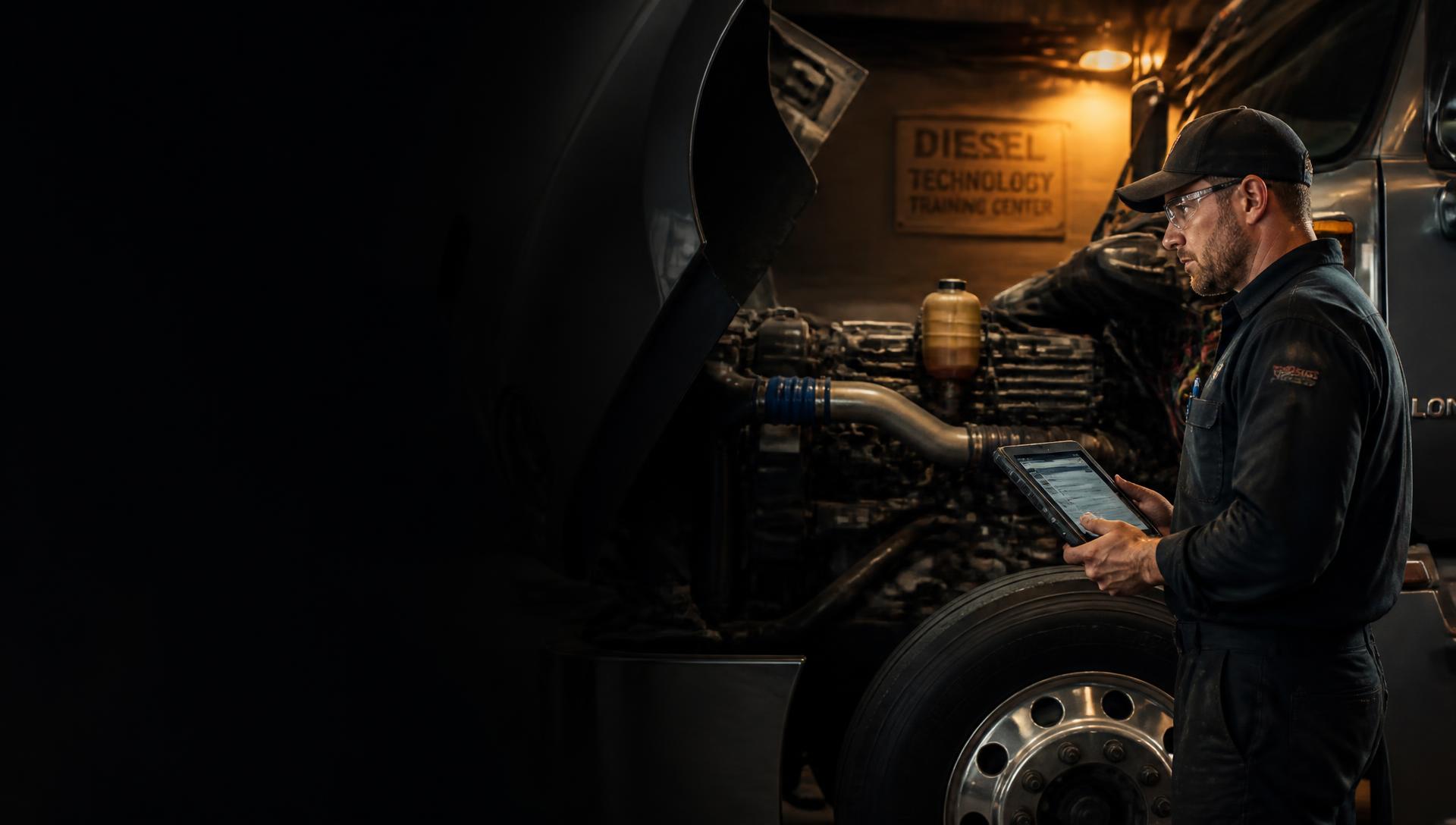
Diesel technology is the study of engines, powertrains, electrical systems, braking systems, fuel systems, emissions equipment, and other components used in diesel-powered vehicles and machinery.
Diesel technicians may work on highway vehicles such as buses and commercial trucks or maintain diesel engines used in generators, industrial systems, marine equipment, and other applications.
The Bureau of Labor Statistics describes diesel service technicians and mechanics as workers who inspect, repair, or overhaul buses and trucks and maintain or repair diesel engines.
O*NET classifies Bus and Truck Mechanics and Diesel Engine Specialists under SOC code 49-3031.
What Do Diesel Technicians Do?
Diesel technicians combine mechanical repair, preventive maintenance, electronics, and computerized diagnosis.
Depending on their role, technicians may:
- Inspect diesel engines and vehicle systems
- Perform scheduled preventive maintenance
- Diagnose engine-performance concerns
- Test batteries, charging systems, starters, sensors, and circuits
- Service fuel-delivery and injection systems
- Inspect and repair cooling and lubrication systems
- Diagnose turbocharger and air-induction problems
- Inspect air and hydraulic brake systems
- Service transmissions, clutches, drivelines, and differentials
- Repair steering and suspension systems
- Diagnose electronic control systems
- Service diesel-emissions and aftertreatment equipment
- Perform vehicle safety inspections
- Replace or rebuild worn components
- Read wiring diagrams and technical service information
- Document inspections, measurements, parts, and completed repairs
BLS notes that diesel technicians may work on electrical systems, make major engine repairs, or retrofit engines with emission-control systems.
What Can You Learn in a Diesel Technology Program?
Program content varies, but coursework may include:
- Shop safety and proper tool use
- Diesel-engine construction and operation
- Preventive maintenance and inspection
- Diesel fuel and injection systems
- Air-induction and turbocharger systems
- Cooling and lubrication systems
- Electrical theory and circuit diagnosis
- Batteries, starting, and charging
- Electronic engine controls
- Scan tools and computerized diagnostics
- Air and hydraulic brakes
- Steering and suspension
- Clutches and manual transmissions
- Automatic transmissions
- Drivelines, axles, and differentials
- Diesel-emissions controls
- Exhaust aftertreatment systems
- Heating and air conditioning
- Hydraulic fundamentals
- Welding and fabrication fundamentals, when included
- Technical mathematics
- Service information and repair documentation
- Fleet-maintenance procedures
- Customer and workplace communication
Not every diesel program covers every subject. Verify the curriculum and hands-on hours directly with each school.
Trucks, Engines, and Diesel Applications
Diesel technology can extend beyond one vehicle type.
Training may prepare students to work with systems found in:
- Medium- and heavy-duty trucks
- Transit and school buses
- Delivery and fleet vehicles
- Emergency vehicles
- Diesel-powered generators
- Agricultural equipment
- Construction machinery
- Marine diesel engines
- Industrial equipment
However, a school categorized under Diesel Technology may not train students in every diesel application.
A diesel program is not automatically heavy equipment, marine, or agricultural equipment training. Those relationships are shown only when they are separately verified.
Electronic Diagnostics and Emissions Systems
Modern diesel engines use electronic control modules, sensors, actuators, high-pressure fuel systems, computerized diagnostics, and emissions-aftertreatment equipment.
Students may encounter systems and concepts such as:
- Electronic fuel injection
- High-pressure common-rail systems
- Exhaust gas recirculation
- Diesel particulate filters
- Selective catalytic reduction
- Diesel exhaust fluid
- Electronic engine controls
- Network communication
- Scan-tool data
- Regeneration procedures
- Emissions-related diagnostic trouble codes
The availability and depth of this training vary by program. Ask schools to identify which engines, vehicles, diagnostic platforms, and aftertreatment systems students actually use.
Diesel Training and ASE Certification Are Different
Completing a diesel program does not automatically make a graduate professionally ASE Certified.
Professional ASE certification generally requires:
- Passing the applicable ASE examination
- Satisfying relevant hands-on work-experience requirements
ASE offers a Medium/Heavy Truck certification series covering different service areas. A school may also offer ASE Entry-Level testing for students.
Clearly distinguish among:
- A school certificate, diploma, or degree
- ASE Entry-Level Certification
- Professional ASE certification
- Manufacturer-specific credentials
- Employer training
ASE Medium/Heavy Truck Test Areas
ASE's Medium/Heavy Truck series includes areas associated with:
- Gasoline Engines
- Diesel Engines
- Drivetrain
- Brakes
- Suspension and Steering
- Electrical and Electronic Systems
- Heating, Ventilation, and Air Conditioning
- Preventive Maintenance Inspection
Individual test offerings and requirements may change. Check ASE for current information. A diesel program may prepare students for selected areas without covering the complete series, and graduation does not guarantee eligibility, certification, or a passing result.
ASE Education Foundation Accreditation
The ASE Education Foundation accredits qualifying Medium/Heavy Truck training programs against industry-developed instructional standards.
Accreditation applies to the particular program and campus reviewed. It should not be applied automatically to every diesel program operated by the institution.
Before relying on an accreditation label, verify:
- The exact school and campus
- The specific Medium/Heavy Truck program
- Current accreditation status
- Accreditation area or level
- Current listing in the ASE Education Foundation directory
CDL Requirements for Diesel Technicians
A Commercial Driver's License is not automatically required for every diesel-technician position.
However, some employers may require an appropriate CDL when technicians must drive commercial vehicles on public roads for testing, transport, or service.
Requirements depend on:
- Vehicle class
- Job duties
- Employer policy
- State and federal regulations
- Required endorsements
A Diesel Technology program and a CDL Training program are different. Diesel students do not receive a CDL unless the school specifically includes verified CDL instruction and testing.
Diesel Work Environments
Diesel technicians may work in:
- Truck dealerships
- Fleet-maintenance facilities
- Transit agencies
- Trucking companies
- Independent diesel-repair shops
- Government maintenance operations
- Construction or agricultural equipment companies
- Equipment rental businesses
- Field-service operations
- Engine distributors
- Marine or industrial facilities
Some technicians work in repair shops, while field-service technicians may travel to equipment or vehicles that cannot easily be moved.
Work may involve:
- Heavy components
- Noise and vibration
- Oils, fuels, and shop chemicals
- Standing or working in awkward positions
- Outdoor conditions
- Evening, weekend, or overnight schedules
- Emergency repairs and overtime
Ask schools about shop safety, lifting equipment, protective equipment, and the physical expectations of training.
Is Diesel Technology a Good Fit for You?
Diesel technology may appeal to people who enjoy:
- Working on large engines and vehicles
- Mechanical and electrical problem-solving
- Using tools and diagnostic equipment
- Preventive maintenance
- Finding the cause of performance problems
- Working with precise specifications
- Learning evolving engine technology
- Working independently and as part of a service team
Helpful qualities include attention to detail, mechanical reasoning, persistence, reliability, computer comfort, safety awareness, and clear documentation.
How Long Does Diesel Training Take?
Diesel training may be offered through:
- High-school career and technical programs
- Short-term certificates
- Diploma programs
- Postsecondary certificates
- Associate degrees
- Apprenticeships
- Manufacturer-sponsored programs
- Employer training
There is no single program duration that applies to every school.
Ask each school to confirm:
- Program length
- Clock or credit hours
- Classroom and laboratory balance
- Credential awarded
- Vehicles and engines used
- Internship or work-based learning
- Full-time and part-time schedules
- Included tools and equipment
- Certification preparation
- CDL availability
- Additional fees
How to Compare Diesel Technology Schools
Before selecting a program, ask:
- Does the curriculum focus on trucks, engines, heavy equipment, or multiple applications?
- Which diesel engines and vehicle classes do students use?
- How many hands-on laboratory hours are included?
- Does the program teach current electronic diagnostics?
- Are emissions and aftertreatment systems included?
- Does it cover air brakes and preventive-maintenance inspection?
- Is the specific program ASE Education Foundation accredited?
- Which ASE Entry-Level assessments are available?
- Does the curriculum prepare students for professional ASE tests?
- Are manufacturer-specific courses or credentials available?
- Is CDL training included or offered separately?
- Are internships or apprenticeships available?
- Which employers recruit from the program?
- Are tools included or purchased separately?
- What credential is awarded?
- What is the complete cost?
- Which campus offers the program?
- Can the school document completion and employment outcomes?
A strong diesel program should clearly explain which diesel applications it covers, how much hands-on practice students receive, which credentials are included, and what experience or testing may still be required after graduation.