What Is HVACR Training?
HVACR stands for heating, ventilation, air conditioning, and refrigeration. Training in this field prepares students to work on the equipment that controls temperature, humidity, airflow, and cold storage in homes, businesses, and industrial facilities.
The work blends mechanical skill with electrical troubleshooting. A technician may braze a copper line in the morning and diagnose a control board or thermostat sequence in the afternoon.
BLS describes HVACR mechanics and installers as workers who install, maintain, and repair heating, ventilation, cooling, and refrigeration systems that control air quality in buildings.
What HVACR Programs Teach
Curricula differ, but HVACR coursework may include:
- Shop and job-site safety
- Hand and specialty tools of the trade
- Refrigeration theory and the refrigeration cycle
- Pressure, temperature, and superheat/subcooling
- Refrigerant types, handling, and recovery
- Tubing, brazing, flaring, and leak testing
- Evacuation, dehydration, and charging procedures
- Compressors, condensers, evaporators, and metering devices
- Electrical fundamentals and circuit diagrams
- Motors, capacitors, relays, and contactors
- Thermostats, controls, and sequence of operation
- Gas and oil heating systems and combustion
- Heat pumps and defrost controls
- Commercial refrigeration systems
- Airflow, duct design principles, and air balancing
- Indoor air quality and ventilation
- Preventive maintenance and system startup
- Diagnostics and systematic troubleshooting
- Customer communication and service documentation
- EPA Section 608 certification preparation, where offered
Not every program covers every subject at the same depth. Confirm curriculum, lab equipment, live-system time, and certification preparation directly with each school.
Heating and Combustion Systems
Heating instruction typically covers the equipment types a technician meets in the field and the safety issues that come with burning fuel indoors.
- Gas furnaces, ignition systems, and gas valves
- Combustion air, venting, and flue requirements
- Heat exchangers and inspection for failure
- Oil-fired equipment, where taught
- Electric resistance heat and sequencers
- Hydronic and boiler basics, where offered
- Safety controls, limits, and flame sensing
- Carbon monoxide awareness and testing
Air Conditioning and Heat Pumps
Cooling instruction centers on the vapor-compression cycle and the practical measurements that tell a technician whether a system is operating correctly.
- Split systems, packaged units, and mini-splits
- Compressor types and operation
- Metering devices, including TXV and fixed orifice
- Superheat and subcooling as diagnostic tools
- Charging by manufacturer method
- Air-source heat pumps and reversing valves
- Defrost cycles and auxiliary heat
- Condensate management and drainage
- Variable-speed equipment and inverter systems, where covered
Commercial Refrigeration
Commercial refrigeration serves supermarkets, restaurants, cold storage, and food processing. Loads run continuously and failures have direct product consequences, so service expectations differ from comfort cooling.
- Walk-in coolers and freezers
- Reach-in cases and display refrigeration
- Ice machines and their service cycles
- Low-temperature and medium-temperature applications
- Defrost methods and time-temperature controls
- Pressure controls, oil management, and receivers
- Rack systems and parallel compressor basics
- Refrigerant leak detection and repair practices
Programs vary in how much commercial refrigeration they include. Some focus mainly on residential comfort systems. Ask what refrigeration equipment students actually work on.
Electrical Systems and Controls
Most HVACR service calls end up being electrical. Programs typically devote significant time to circuits, components, and reading equipment diagrams.
- Voltage, current, resistance, and power
- Single-phase and three-phase power
- Wiring diagrams, ladder diagrams, and legends
- Contactors, relays, and sequencers
- Run and start capacitors
- Motors, motor protection, and troubleshooting
- Transformers and control circuits
- Thermostats, zoning, and communicating controls
- Safety switches, limits, and pressure controls
- Multimeter use and safe measurement practices
Airflow, Ductwork, and Indoor Air Quality
Equipment performance depends on moving the right amount of air. Airflow instruction covers measurement, distribution, and the effects of restriction.
- Static pressure measurement and interpretation
- Blower operation, speed taps, and ECM motors
- Duct systems, fittings, and sizing principles
- Registers, grilles, and diffusers
- Filtration types and pressure drop
- Ventilation requirements and fresh-air strategies
- Humidity control and dehumidification
- Air balancing fundamentals
Troubleshooting and Preventive Maintenance
Diagnosis follows a repeatable process: confirm the complaint, verify power and controls, measure system conditions, isolate the failed component, repair, and verify operation.
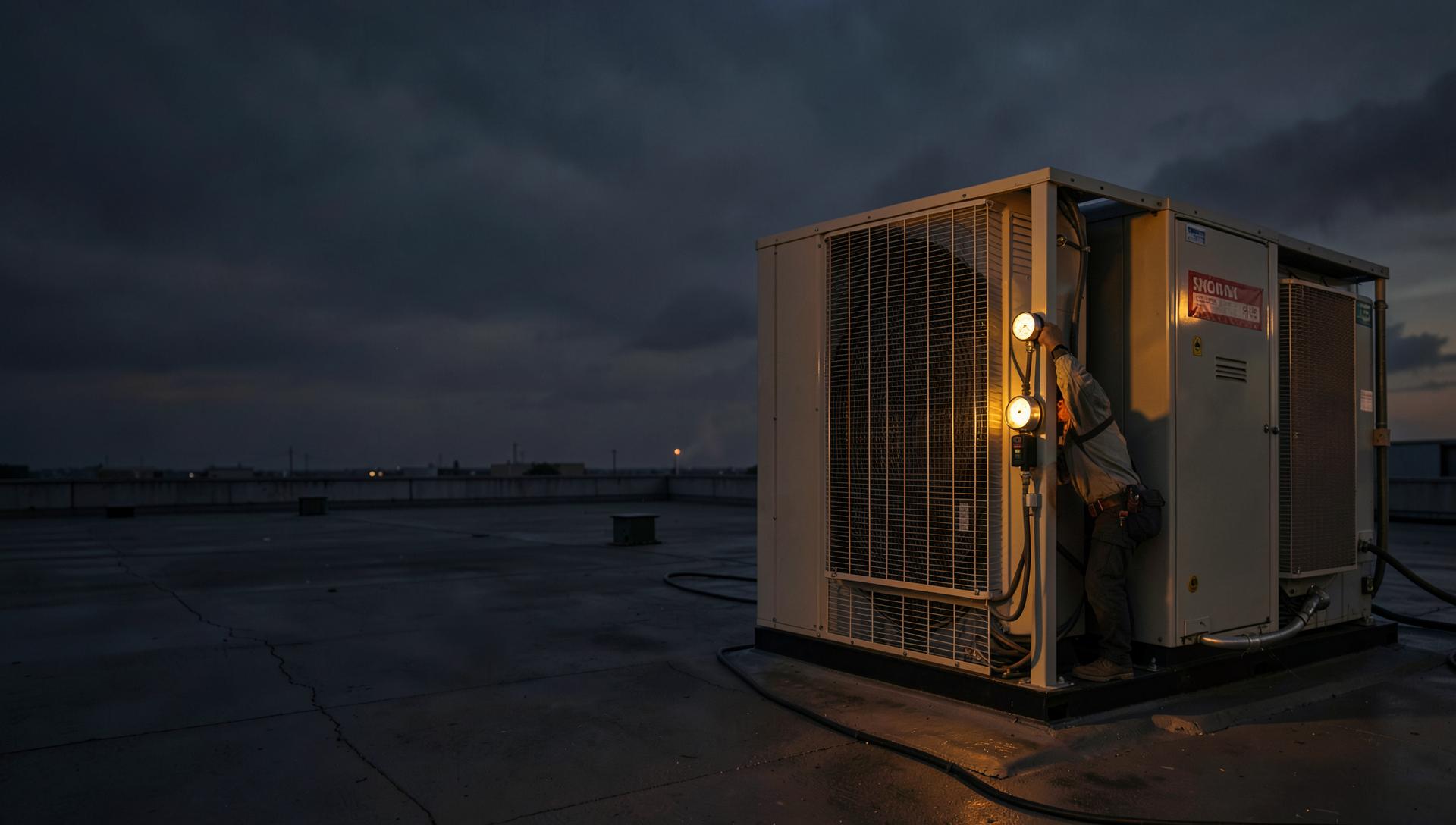
- Gauge manifolds, digital gauges, and vacuum micron gauges
- Temperature clamps, anemometers, and manometers
- Combustion analyzers, where taught
- Leak detection methods
- Reading sequence of operation to isolate a fault
- Seasonal maintenance and inspection checklists
- Component cleaning, coil care, and filter service
- Service documentation and customer explanation
EPA Section 608 Certification
Technicians who maintain, service, repair, or dispose of equipment that could release regulated refrigerants may need EPA Section 608 certification.
EPA describes Section 608 certification types associated with different equipment categories:
- Type I: small appliances
- Type II: high-pressure appliances
- Type III: low-pressure appliances
- Universal: covering Types I, II, and III
A school completion certificate is not the same as EPA certification or a state contractor license. Certification requires passing the applicable EPA-approved examination. Confirm whether a program includes exam preparation, testing, and exam fees.
State and Local Licensing
Many states, counties, and cities regulate HVAC work through contractor licensing, journeyman or apprentice registration, mechanical permits, or gas-fitting credentials. Requirements differ significantly by location.
Licensing commonly considers documented work experience, examination, insurance or bonding, and sometimes sponsorship by a licensed contractor.
Completing a program does not automatically grant a state license. Ask each school how its credential fits your state's requirements, and verify with your state or local licensing authority.
HVACR Safety
HVACR work involves electrical hazards, pressurized refrigerant, brazing heat, combustion products, ladders and rooftops, and confined spaces. Ammonia refrigeration in industrial settings carries additional regulated hazards.
- Electrical safety and lockout/tagout awareness
- Refrigerant handling, frostbite, and asphyxiation hazards
- Pressurized system and nitrogen regulator practices
- Brazing, hot work, and fire prevention
- Combustion safety and carbon monoxide
- Ladder, roof, and fall-protection practices
- Personal protective equipment
- Safe lifting and equipment handling
Career Paths and Work Environments
HVACR technicians work for residential and commercial service contractors, mechanical contractors, refrigeration specialists, facilities and maintenance departments, equipment manufacturers, and government agencies.
- Residential service and installation technician
- Light commercial service technician
- Commercial refrigeration technician
- Controls or building automation technician
- Installation crew member or lead installer
- Facilities maintenance technician
- Service manager, estimator, or trainer with experience
- Contractor or business owner, where licensed
Work may include seasonal peaks, on-call rotations, overtime, attic and crawlspace access, rooftop work, and driving between job sites.
HVACR Career Outlook
BLS reports a median annual wage of $61,010 for HVACR mechanics and installers in May 2025, projects 11 percent employment growth from 2025 through 2035, and projects about 40,600 openings each year on average.
National projections describe an occupation, not the outcome of any school or graduate. Local demand depends on construction activity, climate, and the commercial base in a given area.
How to Compare HVACR Schools
Questions worth asking each school:
- Does the program cover residential, light commercial, and refrigeration?
- What live equipment do students diagnose and repair?
- How many hands-on lab hours are included?
- Do students braze, evacuate, and charge real systems?
- Is EPA Section 608 preparation included, and is the exam offered on site?
- Are exam fees included in tuition?
- How is electrical troubleshooting taught?
- Is commercial refrigeration a separate course?
- Are tools and gauges included or purchased separately?
- What credential is awarded, and how long does it take?
- Does the program align with local licensing requirements?
- Are internships, apprenticeships, or employer partnerships available?
- What is the total cost, including fees?
- Which campus offers the program, and what schedules are available?
Contact this school to confirm its HVACR curriculum, laboratory equipment, EPA Section 608 preparation, schedules, costs, and availability.