Collision Repair & Refinish Training at a Glance
Auto School Guide helps prospective students compare schools offering collision repair and refinish technology training. These programs generally combine damage analysis, non-structural and structural repair, welding, plastic and composite repair, surface preparation, and refinishing so students can work on vehicles that have been damaged in a collision. Programs differ in length, equipment, and how much time is devoted to refinishing versus body and structural repair, so curriculum should be compared school by school.
What Is Collision Repair & Refinish Technology?
Collision repair and refinish technology covers the work required to return a damaged vehicle to a safe and serviceable condition. Automotive body and related repairers repair and refinish vehicle bodies and straighten vehicle frames, according to federal occupational descriptions.
Modern vehicles combine high-strength steels, aluminum, plastics, composites, adhesives, sensors, and advanced driver-assistance components. Because of this, repair work is increasingly guided by vehicle-maker repair procedures rather than general shop practice, and training programs may place growing emphasis on research, measurement, and documentation.
Refinishing is a related but distinct skill set. It focuses on surface preparation, corrosion protection, primers, sealers, color matching, application technique, curing, and finishing so a repaired area matches the surrounding panels.
What Do Collision Repair Programs Teach?
Damage Analysis and Estimating
Students may learn to inspect vehicles, identify visible and hidden damage, research manufacturer repair procedures, determine repair versus replacement, and document a repair plan.
Non-Structural Repair
Instruction may include dent repair, panel removal and replacement, corrosion protection, adhesive bonding, hardware and trim handling, and panel alignment and gap adjustment.
Structural Repair and Measuring
Programs may cover frame and unibody measurement systems, anchoring, pulling and straightening equipment, sectioning procedures, and verifying structural dimensions against specifications.
Welding and Joining
Training may include welding processes used on automotive materials, joint preparation, weld inspection and destructive testing practice, squeeze-type resistance spot welding, riveting, and bonding, along with the differences between steel and aluminum work.
Plastic and Composite Repair
Students may learn plastic identification, cleaning and preparation, adhesive and welded plastic repair, bumper cover repair, and texture restoration.
Surface Preparation and Refinishing
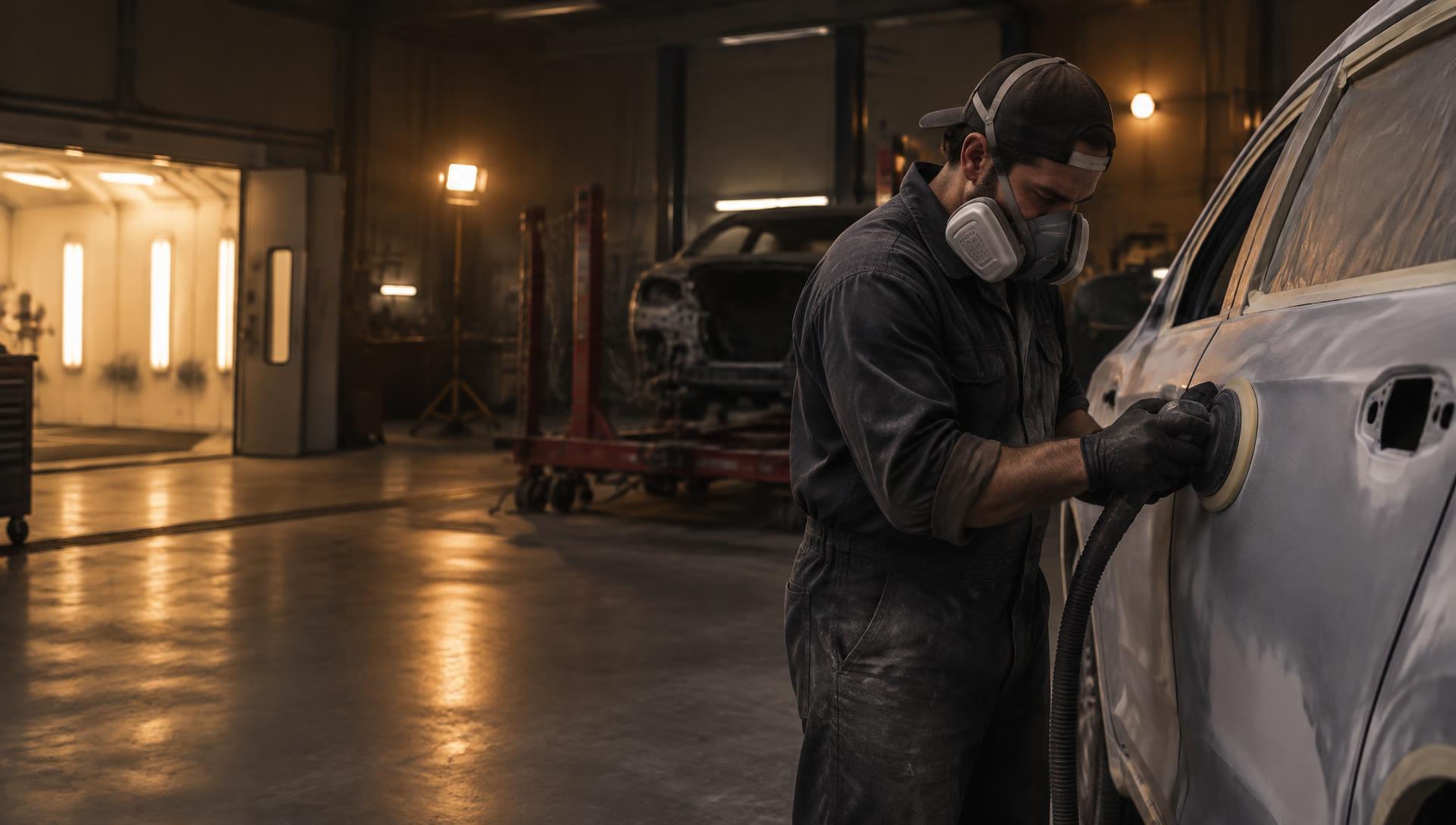
Refinishing instruction may address substrate preparation, filler work, block sanding, primers and sealers, masking, spray-gun setup and technique, color matching and blending, clear coats, curing, and buffing or polishing.
Mechanical and Electrical Considerations
Because collision damage often affects more than the body, programs may introduce cooling, suspension, steering, restraint, lighting, wiring, and sensor components, along with when calibration or specialist service is required.
Shop Safety and Environmental Practice
Coursework commonly covers respiratory protection, personal protective equipment, ventilation and spray booth use, isocyanate and solvent hazards, fire safety, hazardous waste handling, and coating regulations that apply to refinishing operations.
Credentials Related to Collision Repair
A school certificate, diploma, or degree documents completed education. Industry credentials are earned separately and have their own requirements.
- ASE offers collision repair and refinish test series; certification requires passing the applicable tests and meeting work-experience requirements.
- I-CAR provides collision-industry training and role-based recognition used by many repair facilities.
- Some vehicle makers and equipment suppliers offer their own repair-procedure or product training.
- Employers may also expect welding qualification testing on the materials and processes used in their shop.
Verify with each school which credentials, if any, are included in tuition, and which require separate registration and fees.
Where Collision Repair Graduates May Work
- Independent collision repair and auto body shops
- Dealership body shops
- Multi-shop collision repair operations
- Refinish and paint-focused facilities
- Fleet, municipal, and commercial vehicle maintenance operations
- Recreational vehicle, heavy-truck, or specialty body repair shops
- Glass, detail, and reconditioning businesses
Related directions include estimating, parts and materials roles, insurance appraisal, shop management, refinish product support, and instruction. These paths typically require additional experience or training.
Collision Repair Career Outlook
Federal sources report a 2024 median annual wage of $50,680 for automotive body and glass repairers, and project about 2 percent employment change for automotive body and related repairers between 2024 and 2034, with roughly 14,600 openings projected each year on average over that period.
The typical entry-level education reported for the occupation is a high school diploma or equivalent, with training commonly completed through postsecondary programs and on-the-job experience. Earnings vary widely, and many shops pay on a flat-rate or commission basis rather than a fixed hourly wage.
These figures describe an occupation nationally. They are not a school outcome, a placement rate, or a guarantee of employment or pay.
How to Compare Collision Repair Schools
- Is refinishing a full part of the program or a short introduction?
- How much time is spent on structural repair and measuring?
- Which welding processes and materials are taught?
- Does training include aluminum repair in a separate work area?
- Are manufacturer repair procedures used during projects?
- Is plastic and composite repair included?
- How many spray booths, prep stations, and frame benches are available?
- How many students share each stall, booth, or bench?
- Are paint, materials, abrasives, and safety equipment included in tuition?
- What tools are students expected to purchase?
- Is respirator fit testing provided?
- Are I-CAR or ASE preparation opportunities offered?
- What are instructor qualifications and shop experience?
- Are internships or employer introductions available?
- Are completion and placement figures current and verifiable?
- What is the total program cost, including fees?
- What is the cancellation and refund policy?
Ask to tour the shop while classes are running. Booth availability, equipment condition, and hands-on time per student are easier to judge in person than from a brochure.