
If you enjoy solving problems, working with your hands, and learning how vehicles operate, becoming an automotive technician could be a smart career path.
Automotive technicians inspect, diagnose, repair, and maintain cars, trucks, and other vehicles. As vehicles become more advanced, today’s technicians need both mechanical skills and computer-based diagnostic knowledge.
The U.S. Bureau of Labor Statistics projects about 70,000 openings per year for automotive service technicians and mechanics from 2024 to 2034. Bureau of Labor Statistics
What Does an Automotive Technician Do?
Automotive technicians work on systems such as:
- Engines
- Brakes
- Electrical systems
- Steering and suspension
- Heating and air conditioning
- Transmissions
- Computer diagnostics
Some technicians work on general repair, while others specialize in areas like diesel, performance, collision repair, hybrids, or electric vehicles.
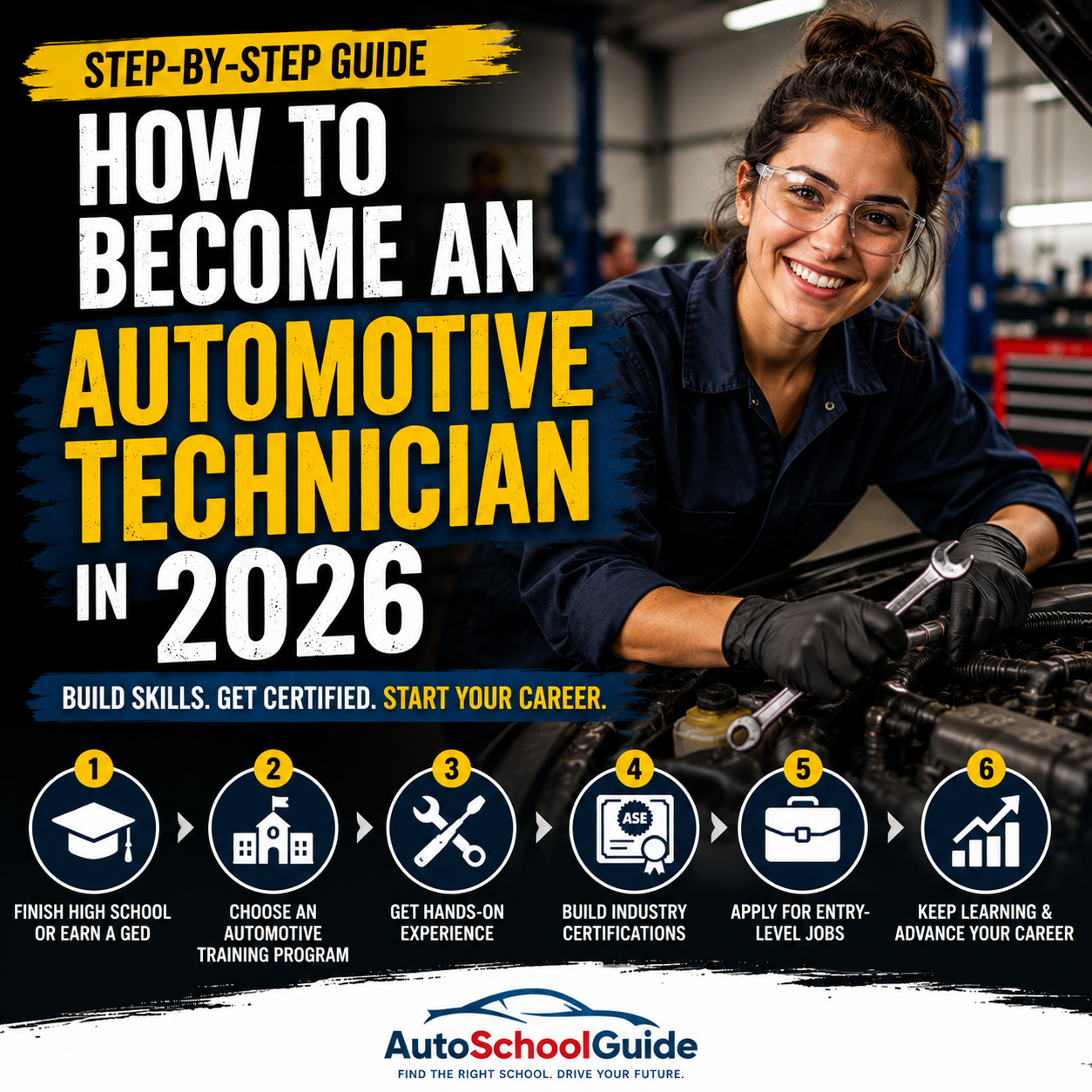
Step 1: Finish High School or Earn a GED
Most employers and training programs require a high school diploma or GED. Helpful classes include math, computer science, electronics, and shop-related courses.
Step 2: Choose an Automotive Training Program
Many students attend a trade school, technical school, or community college automotive program. These programs teach hands-on skills in a shop environment and may help prepare students for entry-level jobs.
Look for programs that offer:
- Hands-on vehicle training
- Modern diagnostic equipment
- Experienced instructors
- Career services
- Employer connections
- Certification preparation
Step 3: Get Hands-On Experience
Automotive repair is a skill-based career. The more time you spend working on real vehicles, the faster you build confidence.
Hands-on experience may come from:
- School labs
- Internships
- Apprenticeships
- Entry-level shop jobs
- Dealership training programs
Step 4: Build Certifications
Certifications can help show employers that you are serious about your career. ASE offers certification tests across many transportation-related disciplines. ASE
Entry-level students may also pursue ASE Entry-Level certifications in automobile, collision repair, or medium/heavy truck areas. ASE Education Foundation
Step 5: Apply for Entry-Level Technician Jobs
Common first jobs include:
- Lube technician
- Tire technician
- Apprentice technician
- Maintenance technician
- Express service technician
- Shop assistant
These roles help new technicians gain speed, accuracy, and real-world experience.
Step 6: Keep Learning
The best technicians never stop learning. Modern vehicles use advanced electronics, sensors, driver-assist systems, hybrid systems, and electric powertrains.
Continuing education can lead to higher-paying roles such as:
- Diagnostic technician
- Master technician
- Shop foreman
- Service advisor
- Service manager
- Fleet technician
Final Thoughts
Becoming an automotive technician does not require a traditional four-year degree. For many students, a focused automotive training program offers a faster and more practical path into the workforce.
Ready to start your career? Explore automotive technician training programs and find a school that fits your goals.