What Is Marine Technician Training?
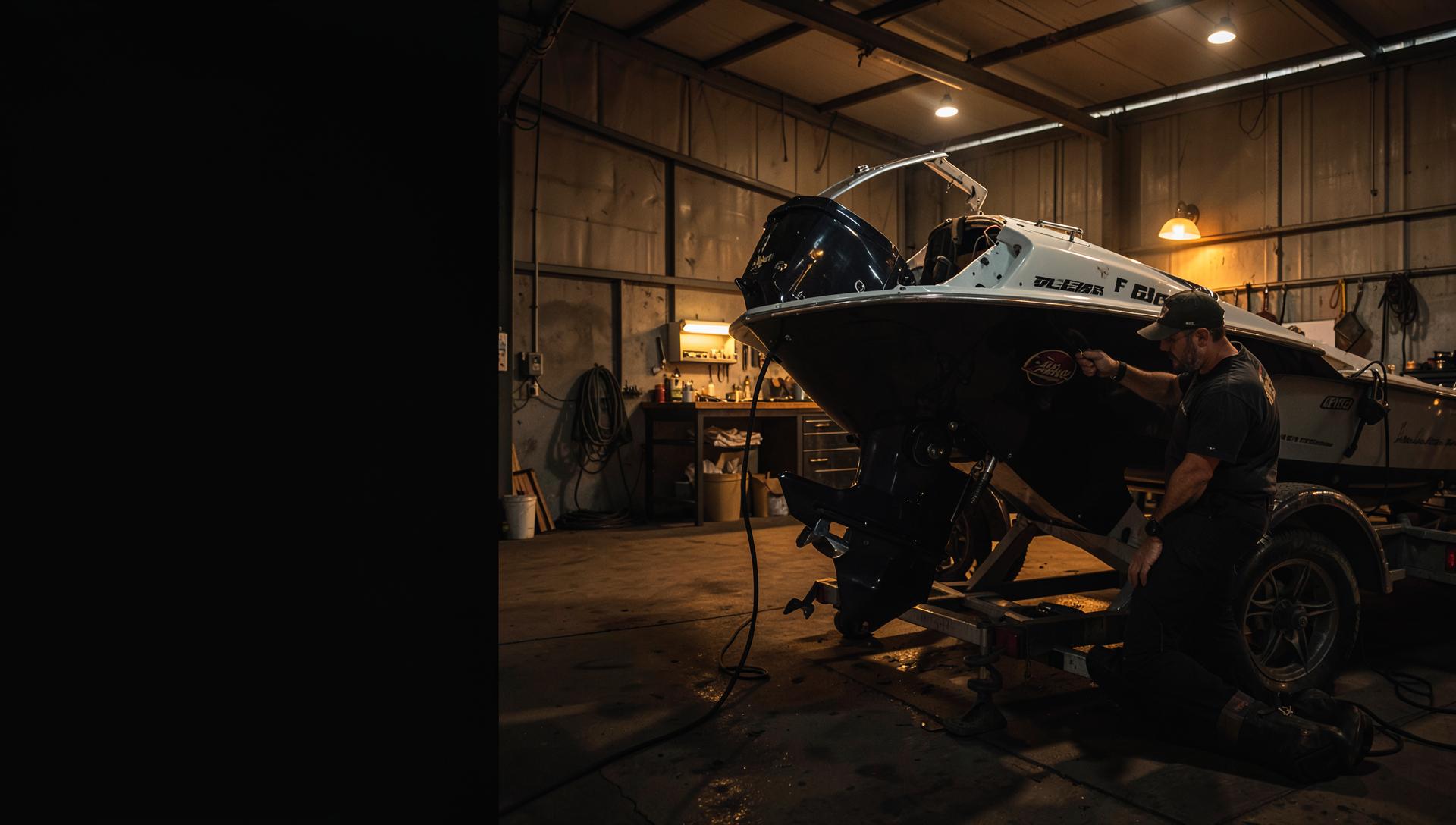
Marine technician training prepares students to service the engines, drives, electrical systems, and onboard equipment found on recreational and commercial boats.
The work resembles automotive service in its fundamentals, but the environment changes everything: saltwater corrosion, cooling water instead of radiators, marine-specific ignition protection, seasonal use patterns, and equipment that must keep working far from shore.
BLS describes motorboat mechanics and service technicians as workers who repair and maintain the mechanical and electrical components of boat engines, including inboard, outboard, and inboard-outboard engines.
Outboard, Inboard, and Sterndrive Engines
Marine propulsion comes in several configurations, and each has different service access, cooling arrangements, and failure patterns.
- Outboard motors mounted on the transom, from small portables to large multi-engine setups
- Inboard engines mounted inside the hull driving a shaft and propeller
- Sterndrive or inboard-outboard systems combining an inboard engine with an outdrive
- Jet drives used in some boats and personal watercraft
- Two-stroke and four-stroke engine designs
- Gasoline and marine diesel applications, where covered
Engine coursework typically covers:
- Engine theory and construction
- Compression, leak-down, and mechanical testing
- Valvetrain and timing components
- Lubrication systems and oil analysis basics
- Powerhead service and rebuilding, where included
- Break-in, tuning, and performance verification
Marine Fuel, Cooling, and Exhaust Systems
Fuel systems
- Carbureted and fuel-injected systems
- Direct injection and electronic fuel management
- Fuel pumps, filters, and water separation
- Ethanol-related fuel issues and storage problems
- Fuel tanks, vents, and ignition-protection requirements
Cooling systems
- Raw-water and closed-loop cooling
- Impellers, water pumps, and thermostats
- Heat exchangers and coolant service
- Overheating diagnosis and blockage
- Winter freeze protection
Exhaust systems
- Wet exhaust design and water injection
- Risers, manifolds, and corrosion inspection
- Backflow and water-intrusion failures
- Carbon monoxide hazards on boats
Propulsion and Lower Units
The lower unit or drive transmits engine power to the water and takes the most abuse from grounding, debris, and corrosion.
- Gearcase disassembly, inspection, and reassembly
- Gear lash, shimming, and gear-oil condition
- Water pump and impeller replacement
- Seals, bearings, and water intrusion diagnosis
- Propeller types, pitch, diameter, and material
- Propeller damage, cavitation, and ventilation
- Shafts, struts, couplings, and cutless bearings on inboards
- Trim and tilt hydraulic systems
- Steering systems, including hydraulic and electronic
Marine Electrical and Electronic Systems
Electrical faults are among the most common marine service complaints, and moisture makes them worse over time.
- DC electrical fundamentals and marine wiring practices
- Batteries, banks, switches, and isolators
- Charging systems and alternators
- Starting circuits and solenoids
- Ignition systems and ignition protection
- Engine management sensors and control modules
- Diagnostic software and manufacturer scan tools
- Onboard AC systems and shore power, where covered
- Corrosion-resistant terminations and connectors
Boat Controls and Accessories
Beyond the engine, technicians service the equipment owners rely on for comfort, navigation, and safety.
- Throttle and shift controls, mechanical and digital
- Gauges, displays, and instrument networks
- Bilge pumps, blowers, and ventilation
- Livewells, pumps, and plumbing
- Trolling motors and accessory power
- Navigation and electronics installation, where offered
- Trailers, bearings, brakes, and lighting
Diagnostics and Preventive Maintenance
Marine diagnosis follows the same logic as other vehicle work: verify the complaint, gather data, test rather than assume, repair, and verify under real operating load. Water testing is often part of that verification.
- Service manuals, bulletins, and wiring diagrams
- Scan tools and manufacturer diagnostic software
- Pressure, vacuum, and electrical testing
- Sea trials and load testing
- Scheduled service intervals
- Pre-delivery inspection and commissioning
- Service documentation and customer explanation
Corrosion and the Marine Environment
Saltwater, dissimilar metals, and stray current attack boats continuously. Understanding corrosion is a core marine skill rather than an afterthought.
- Galvanic corrosion and dissimilar metals
- Sacrificial anodes, inspection, and replacement
- Stray current corrosion and bonding systems
- Fresh versus saltwater service differences
- Flushing procedures after saltwater use
- Protective coatings and antifouling basics
- Fastener selection and thread protection
Seasonal Service and Winterization
In much of the country, marine service follows a seasonal rhythm. Fall and winter bring layup work, and spring brings commissioning.
- Winterization of cooling systems and freeze protection
- Fuel stabilization and storage preparation
- Fogging, lubrication, and corrosion protection
- Battery removal, charging, and storage
- Shrink wrap and covered storage considerations
- Spring commissioning and systems checks
- Managing seasonal workload and scheduling
Marine-Shop and Boatyard Safety
Boatyards combine heavy lifting equipment, fuel, confined spaces, chemicals, and work at height. OSHA maintains guidance for the maritime industry.
- Fuel and vapor hazards and ignition sources
- Carbon monoxide in enclosed spaces
- Confined space and bilge work awareness
- Lifts, hoists, slings, and blocking
- Working at height on boats on stands
- Chemicals, solvents, and resin dust
- Electrical safety around water
- Personal protective equipment
Career Paths
Marine technicians work at boat dealerships, marinas, boatyards, independent repair shops, engine distributors, rental and charter fleets, and mobile service operations.
Related but distinct roles
- Marine technician: services engines, drives, and onboard systems
- Marine engineer: an engineering role focused on design of marine systems, typically requiring an engineering degree
- Ship engineer: operates and maintains propulsion machinery aboard vessels, with its own credentialing
- Boat operator or captain: licensed to operate vessels, not to repair them
- Automotive technician: related fundamentals, but different systems, environment, and equipment
Manufacturer training is common in this field. Dealerships often send technicians to brand-specific courses after hire.
A school program does not automatically create manufacturer certification or dealer authorization. Ask what brand-specific training, if any, a program includes.
Career Outlook
BLS reports a median annual wage of $58,070 for motorboat mechanics and service technicians in May 2025. For the broader small engine mechanics group, BLS projects about 3 percent growth from 2025 through 2035 and about 7,700 openings each year on average.
Growth and openings describe the broader group, not motorboat mechanics specifically. Local demand depends heavily on nearby waterways, boating seasons, and the size of the local marine market.
How to Compare Schools
Questions worth asking each school:
- Which engine types do students work on: outboard, inboard, sterndrive, diesel?
- How many hands-on lab hours are included?
- Are complete boats and drives available, or only bench engines?
- Is lower-unit and gearcase service included?
- How much marine electrical and diagnostics is taught?
- Which diagnostic software and scan tools are used?
- Is manufacturer-specific training included?
- Is corrosion control and winterization covered?
- Is there any water testing or sea trial component?
- What credential is awarded, and how long does it take?
- Are tools included or purchased separately?
- Are internships or dealer partnerships available?
- What is the total cost, including fees?
- Which campus offers the program, and what schedules are available?
Contact this school to verify its current marine technician curriculum, engine types, diagnostic equipment, schedules, costs, and availability.